Posted on

Baker Awakening

About 20 years ago, while training to make artisan bread, the concepts taught were a return to the old ways of baking—developed over thousands of years prior to the invention of large scale milling and centralized agriculture. I learned about long, cool and slow fermentation of dough drawing out the hidden essence of the grain and bringing natural sweetness to the loaf as the starches broke down into simple sugars. How these sugars caramelized the crust, deepening the layers of taste and aroma throughout the bread. This drew me to the craft: my love of fine food and rich flavor.

I soon realized there was even more to this magic of baking than I was imagining. My lessons since have taken me on a journey of understanding and imparted upon me the responsibility to feed people not only delicious bread, but more importantly, a healthful and nutritious loaf.

Touring Kansas on a busload of bakers was an eye opener. I saw the shear impact large agriculture has on our environment and communities. Wheat can grow any place, it’s a grass. It is mono-cropped in the Midwest not because this is a great place for it to grow, it’s one of few things that can be kept alive there…on a life support system of synthetic nitrogen, herbicide and pesticide. The farmers themselves would not eat the grain from their fields, but instead cultivated a side crop, unsprayed, compost fertilized and home milled for their own consumption. Their towns are nearly vacant.

Weston Price and Sally Fallon introduced me to Phytate, a molecule in the kernel of wheat binding the vitamins and minerals that the future plant will need to grow. When this seed begins to germinate, an enzyme releases the bonds. If the wheat is instead ground into flour, and the dough fermented quickly, there isn’t time for these nutrients to unlock. They are not available to your body. Extended dough fermentation, especially sourdough, mimics germination, releasing the nutrients for human absorption.

Andrew Whitley (Bread Matters) quantified the Price/Fallon work for me. The brain receives the hunger signal when the body is asking for nutrients, not just calories. For most of us, hunger means “eat food”. When we choose food with little nutritional value (or availability), we gain the calories, though the hunger signal returns. We eat again, until the nutrition finally adds up to what the body needs to operate. The calories add up as well. In our country, this has led us to obesity, childhood & adult-onset diabetes, heart disease, high cholesterol, etc. It’s vital for me to make food providing more nutrition per caloric bite.

I shouldn’t mention gluten. I love the stuff. This substance allows me to turn a hard seed of wheat into a light, soft, airy, palatable and nutritious food. My life revolves around gluten. People have consumed gluten for over 5,000 years and prospered. But we aren’t actually set up to digest straight grains.

Every culture from the dawn of agriculture has pre-processed any grain prior to eating. We learned to boil, soak, sprout, grind, and/or ferment our grain; maximizing digestive and nutritional qualities. This was bread making until the 1940’s when the world at war had to produce food faster with fewer people. Automation and chemical additions to bread dough produced edible loaves in less than 4 hours. It’s no ‘wonder’ we can’t digest this stuff. In fact, gluten may not even be the culprit.


Artisan baking is a revival of earlier baking methodology. These bakers ferment grain. I have many customers who eat our bread and none other because it’s digestible without issue. I suspect they would manage fine with most long fermented breads.

(note:  Celiac Disease is a unique case of gluten effecting the lining of the intestine and subsequent nutrient absorption by the body.  Our bread does not keep this from occurring.)

Now, I am a different baker than I was when I started. As I learn, I adapt. I understand the importance of my loaves as community builders, as environmental stewards, as nutrition, as health. Staff of life, indeed—by making bread well, the world around us vastly improves.

by Scott Mangold, Owner of Breadfarm

Posted on

“If it ain’t broke, don’t fix it”

That storm came in with a vengeance and left a wake of damaged trees from Stanwood to Vancouver B.C. Snapped branches and busted power lines were everywhere. I usually think of a storm like that coming in December. I wasn’t around when the big storm of ’63 came through, but I do remember my mom finishing a Thanksgiving turkey on the top of a wood stove in ’83.

Well, about the time I took assessment of all the damage around the house, it dawned on me, “I wonder if the greenhouses are still there.” A greenhouse is like a big kite – the wind can catch a corner and twist it all up or it can break free and start flying.  A little worried, I walked around the corner of the barn and, with a sigh of relief, I saw that they were still standing with all the plastic still attached.

We built our greenhouses out of wood and used some big rebar anchors to secure them to the ground. That surely helped hold them together, but probably the biggest factor for them to hold together was maintenance!

Earlier in the spring a piece of the channel we used to secure the greenhouse plastic had pulled free and was flopping in the wind, so I decided to fix it. I can almost guarantee that if I hadn’t taken the time at that moment to go get the cordless drill and re-secure the plastic, I would have lost most of it in that storm. Mostly because once we get to farming, the adage, “If it ain’t broke, don’t fix it,” wins the day and when the weather is as beautiful as it was from April to mid-August, I wouldn’t have given the greenhouse another thought. Boy, am I ever glad I fixed that greenhouse!

It is the same with our health. All too often we put off changing a health habit that we “know” isn’t good for us because we really aren’t “broken.” Many of us ignore all the little symptoms that are “talking” to us, push through them, and keep on going. It’s only years later that we realize that these things didn’t get the attention that they deserved. Moms and dads are especially guilty of this. We rarely take care of ourselves because being a parent by definition means that the needs of others come first.

But in the end, it is up to us to care for ourselves, to make a better food choice, a better health choice, to go see the M.D., N.D., chiropractor, etc. Most of you already are making better food choices for yourself and your family because you are getting a box of good. What about the rest of the healthy choices? It is your story and a healthy you is one of the best gifts you can give to those you love.

tristan-sign

Tristan

Posted on

I am Grateful


Lately I’ve been noticing that every time someone asks me, “How are you?” or “How was your summer?” or “How have things been lately?” the response is always the same: “Busy.” In fact that’s been the response for quite some time.

At first I believe I viewed being busy as the sign of adulthood. As a kid I remember hearing adults responding in the same way so often that I grew to think that was the right answer or, at the very least, the answer to aspire to. To be busy is the goal then, I thought. Somehow I began to put value in being busy, so that when I would respond to those questions with “I’ve been busy,” it came with a certain bit of pride.

I’m not sure that summer could have any other answer than “busy” when you have three children to keep entertained and a freelance job to manage, but I have a new goal for the fall: I want to respond in a different way. For that to occur, I think there is a mindset shift that needs to happen. Busy is no longer the goal – joy is, satisfaction is, health is, gratitude is.

If we saw each other on the street and you asked me, “How are you?” and I responded, “I’m grateful,” what would we think? I think both of us may be a bit surprised at such an unexpected response, but that is my goal – to reach for grateful over busy, joyful over overwhelmed, and satisfied over frenzied.

Fall will indeed still be busy with birthdays to celebrate, school starting, and the holidays nestled in there too, but there will also be slow-simmered roasts and braises, pots of soup, and loaves of bread that can’t be rushed and aren’t too keen on busy days. They beg to be sipped, savored, and doted on with a sort of ease that causes me to pause.

May this next season, however busy it may be, remind us that there is more to life than the busyness. Let’s focus on that.

Ashley Rodriguez

Chef, Mom, Food Blogger, Author

www.notwithoutsalt.com

Posted on

Everything is Early!

While our family was picking Gravenstein apples last week, I couldn’t help but notice that the Honeycrisp trees were full of red fruit. The telltale sign of ripeness is when the underlying color turns from green to yellow. On a red apple that can be a little harder to discern from a distance, but up close it is pretty obvious. Another sign that the fruit is getting ready is with how easy it comes off the tree. Most of the time, when an apple is not ripe, picking it resembles a tug-o-war match. At that moment, wise farmers concede defeat and wait a few more days J. The worst way to determine when an apple is ready to pick is to wait till they are all on the ground! With that said, there are always a few overachievers that ripen early and fall, which is a sure sign to get picking!ravenstein and Honeycrisp apples are three weeks early, potatoes are early, winter squash is really early, garlic and raspberries are not so much early, and corn loves this weather. But most things are early, especially for the later maturing crops. The good thing is that they are early and not dead! The dry spring and early summer has taken its toll on crops, but with good management we were able to use the heat to our advantage.

Having some late August rain has certainly helped take the edge off the fall harvest. The squashes—Delicata, Acorn, the three varieties of pie pumpkins, Kabocha (yes, Eileen, I planted those for you!) and Sweet Dumplings—have loved this weather. If truth be told, they are ready to be picked, but it just messes with my mind to think about havesting winter squash in August. So I will continue to walk past them, smile, and pretend they have a few weeks to go!

If the weather pattern continues trending with wetter winters and drier summers, us farmers will begin to shift the timing of our plantings and eventually even the crops we grow, to better fit the “new” growing season. Things like June strawberries will be replaced with May strawberries – I can hardly even say, “May strawberries.” On our farm we will definitely plant spinach, beets, chard, and peas earlier to take advantage of the rain and warmer springs. I will probably plant tomatoes and peppers outside the greenhouses.

There is an upside to drier summers: the heat produces sweeter tasting fruit and little water stress “kicks” the sugar off the charts. It just requires us farmers who are normally “water rich” to adjust to less water and watch for signs of stress. I am confident we can make the switch!

The long and short of it is that local farmers are going to have a few challenges with when and what to plant for the next few years, but dealing with weather isn’t new and growing food isn’t either.

tristan-sign

Farmer Tristan

Posted on

NYC

The Klesick family carved out some unusually hard-to-find space during the summer and went to visit Joelle’s sister in Manhattan last week. Mostly, it took a lot of early planning of what crops to plant and when to plant them. It also helped that we have an amazing team of people we work with to keep the farm going.

NYC: what an eye opening experience that was. Of course, I have been to big cities, but nothing quite like New York City. We logged over 60 miles on our feet (Joanna, our intrepid 5 year old, walked every one of them!).

I keep thinking about the story, Country Mouse, City Mouse. We live on 40 acres in the floodplain and they live in a 15 story high rise apartment in Manhattan. We pick berries, apples, kale, cucumbers as we walk the fields and they stop by the grocery store in the bottom floor of their apartment.  Amazing!

I am sure when they come to see us, it is too quiet for them to sleep, as for us, that city never sleeps – it just slows down a notch. We did the tourist thing from Central Park, to The Met, the Museum of Natural History, Ellis Island, and the Statue of Liberty. The 9/11 Memorial was intense and beautiful. We even went to a Yankees vs Red Sox game via the subway.  Now that was an experience! Just imagine trying to squeeze twelve more people into a Prius that already has five passengers. Definitely no personal bubble space!

On our way to DC and Philadelphia, I got to see some farmland in NJ, PA, DE, MD and VA. Yes, there is still farmland back east and it is a good thing, because when I was in NYC, I had this heavy thought on my mind: “We have to save farmland, because someone has to feed all these people, FOREVER!”

As a farmer, I couldn’t help but think about what it would take logistically to keep NYC fed. That is a daunting task. No one has a car, let alone a freezer or a garden. Yes, there are farmers markets, but they pale in the need to feed millions of people surrounded by high rises and streets. The city is dependent upon outside resources. In fact, I would venture to say that most New Yorkers don’t even think about it.  Why would they? They have to trust the system.

America has amazing infrastructure in place to grow, harvest, process, and deliver food to people everywhere, but if that chain is disrupted even for a day or two, NYC is in a world of hurt. Imagine what a simple snow storm does to grocery store shelves. What would happen if California and Florida were both in a drought and couldn’t produce their traditional volumes of food?

As your farmer, I am working to not only grow healthy food, but preserve the ability to feed future generations. After my visit to NYC, saving Farmland is of even more paramount importance, every acre everywhere!


tristan-sign

Posted on

Inchelium Red Garlic

We’re sharing our Inchelium Red Garlic harvest with you again next week! These gigantic bulbs not only taste above and beyond “regular” garlic, they have the heritage to back them up! It is considered to be the oldest strain of garlic in North America!

Here’s a little more about this heirloom garlic.

Inchelium Red Garlic Allium sativum var. sativum

One of the most productive of all the heirloom garlics, this softneck variety is also an artichoke type. This means that its bulbs cluster in layers like artichoke petals. The variety was discovered on the variety was discovered on the Coleville Indian Reservation at Inchelium, Washington. It has consistently won high marks (often taking first place) in garlic tastings. From a culinary standpoint, it is probably one of the best of the American heirloom red garlics.

Its historical relevance is profound, it has been identified as the oldest strain of garlic grown in North America, having been grown far before the arrival of English settlers. It was found originally on the Colville Indian Reservation in Inchelium, Washington. Today Inchelium garlic can be found sold under its true name (not simply, garlic) throughout the Pacific West and Northwest United States.

Visit our friends Filaree Farm for more info.


Posted on

Progress. One Bite At A Time.

This week we start delivering to the Kenmore, Lake Forest Park and Inglewood communities on Wednesdays. And on Thursday we are going to be delivering to North Seattle or 145th Street North to Snohomish County.

This is very exciting news for us here at Klesick Farms. For the last 17 years we have been growing, sourcing, and delivering only organically grown fruits and vegetables. We haven’t deviated from our mission or our message of helping growers stay on the land and helping our customers eat well.

We are passionate about healing our Nation through farming and believe that the health of our Nation is tied to the health of our food supply and helping more customers eat healthy food is a big part of the solution.

Over the years, what was a dream to be a family farm became a good food community; a community of passionate growers and urban allies, working together to build a better food system for future generations. This is a community of folks who believe that the environment and farming can do more than coexist, the two can thrive together. Folks who see the through ruse of the GMO proponents and believe that world can be fed using organic growing practices AND SHOULD BE!

I love what we do, I love that we have done it every day, with every delivery to every customer for so many years. We believe that by working in unison, Klesick Farms, our growers, and you, we are making a difference locally and beyond.

And as a local good food community we are also a part of a larger difference that is being played out in communities across America and the world.

We are turning the tide of a corporate driven food system one bite at a time.


Farmer Tristan


tristan-sign

Posted on

Join Me in Protecting the Integrity of Our Food Supply

Locally, we have been fighting to preserve farmland and now I need your help to convince our two Congress Representatives to vote NO on HR1599: the Safe and Accurate Food Labeling Act. This bill essentially prevents states from adopting their own GMO laws and REVERSES any laws that have already passed. That is the wrong kind of leadership on this issue.

The anti-GMO community is calling this the DARK Act (Denying Americans the Right to Know Act).  I have spoken with Congressman Rick Larsen and Congresswoman Suzan Delbene’s office and neither of them are committing at this time on which way they are going to vote. The vote is in two days – I know how I would vote!

Please click on the link and express your opinion. The vote is scheduled for Wednesday or Thursday. Also, please share this and let’s let our representatives know that GMO’s are not the future and should not receive preferential treatment from the federal government. ASK them to vote NO on HB 1599, aka the DARK Act.


Tristan


Act Now on GMO Labeling to Stop the “DARK” Act

Contact your Representative in Congress today!

From the National Organic Coalition 

The innocuously named HR 1599: the Safe and Accurate Food Labeling Act has been dubbed the DARK Act (Denying Americans the Right-to-Know Act) by members of the good food movement. The DARK Act will be voted on in Congress next week.

The DARK Act will:

  • Prevent states from adopting their own GMO labeling laws and reverse laws that have already passed.
  • Prevent state or county laws regulating GMO crops.
  • Prevent the Food and Drug Administration from requiring companies to label GMO ingredients and instead continue a “voluntary” labeling policy. In 14 years, not one company has voluntary labeled products containing GMO ingredients.

Take action now to stop the DARK Act!

  1. Call the Capitol Hill Switchboard at 202-224-3121, and ask for your Representative’s office where you can leave her or him a message.
    Click here to find out who your Representative is.
  2. Click here to send an email: Tell Congress to oppose the DARK Act and support mandatory GE food labeling!

Below is some sample language for your message to your Representative.
Please customize this to fit your voice.

Please oppose HR 1599 (the “Safe and Accurate Food Labeling Act”). Congress should focus on the labeling solutions that Americans are asking for – not legislation written by and for big food and chemical companies that only serves to keep Americans in the dark.

You may also thank legislators who have come out against the Dark Act and for labeling:

Chris Gibson of New York
Peter DeFazio of Oregon
Barbara Boxer of California

For more information, and to send a message today, click here.

GMO food labeling is important to Americans, with over 90% consistently supporting transparency in the marketplace. In 2013 and 2014 there were over 70 GMO labeling bills introduced across 30 states, with laws being passed in Maine, Connecticut and Vermont.

View this post on Cornucopia.org

Posted on

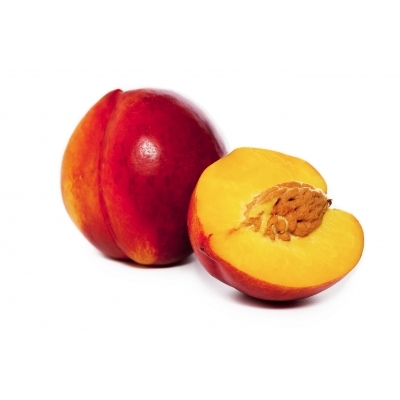
Stonefruit 101

Stonefruit 101

“Stonefruit” refers to members of the genus Prunus, which includes peaches, nectarines, plums, pluots, cherries, and apricots. The season for summer stonefruit is short-lived, and delicious! With the fruit coming and going so quickly, we don’t want you to miss out by having to toss spoiled or improperly ripened fruit. Here’s some info on proper storage in order for you to make the most of these short-season gems.

Care – Store unwashed fruit at room temperature until ripe (usually only 1-2 days), then place in sealed container in the fridge.

Ripeness – Gently press around stem and when flesh gives slightly to pressure fruit is ripe. Stonefruit ripens from the inside to the outside, so if fruit is soft all over it is more likely overripe.

Tips for Preventing Spoilage – Stonefruit’s biggest enemy while ripening is moisture coupled with lack of airflow. Set ripening stonefruit on a cloth or paper-covered countertop or in a place where it gets plenty of airflow. Try setting them stem side down to ripen. This lessens the chance of then rolling and bruising. Once your stonefruit is ripe, it deteriorates very quickly. Within a day of being fully ripe, if left out of refrigeration, you can have overripe/spoiled fruit and some very attracted fruit flies. Check daily and place in refrigerator as soon as you notice the stem area has begun to soften. Take special care when handling your stonefruit – never squeeze to check for ripeness! Even a small bruise will be cause enough to turn into a rot/bruised spot on your fruit as it is still ripening.

Use – Once fruit is ripe, and you’ve placed in the refrigerator, plan to use within a day or two (this gives you a total keeping time of about 4-5 days). Stonefruit is refreshing as a healthy breakfast paired with yogurt or hot/cold cereal, as a topping to a green salad, and as an ingredient in fruit salads. For grilling, or for topping green salads: use slightly less ripe fruit, it will hold up better without breaking apart/juicing. All Stonefruit bakes up fabulously into crisps, pies, and sauces!

Posted on

Klesick now serves Shoreline & Inglewood Communities

We have exciting news! We are expanding our delivery zones to serve Shoreline and Inglewood communities next week!

Let your friends, co-workers, and family know that we are now offering a box of good to the Inglewood/Bothell communities to 116th St. on Wednesdays and to the North Seattle/Shoreline communities down to NE 145th St. (Hwy 523) on Thursdays.

As I mentioned in last week’s newsletter, due to the disappointing vote from The Snohomish County Council a few weeks ago, concerning farmland preservation, I am now working on a different strategy. If the county won’t help us preserve farmland, we will have to do it ourselves – one intentional bite at a time. The strategy is simple: deliver more fruits and vegetables from local farms to local eaters.

Throughout this last year we have been preparing to expand our delivery service and areas in order to build strong bonds between local farmers and local customers.

In October we moved into a new packing facility in Stanwood, nearer to our farm and to other farms that we work closely with in the region. At that time we added more infrastructure to better serve local farmers and you, our customers. We added additional cooler space and freezer space as well as expanding our packing capacity.

Last month we expanded our delivery days from 4 days to 5 days.

Last week we updated our shopping cart to be more mobile-friendly than ever. Ordering organic, local, and GMO-free produce just got easier.

This brings you a fun referral opportunity: For every person you refer from anywhere, you will receive a free bar of Theo Chocolate and your name will be entered for a chance to win a free two-night stay at the beautiful La Conner Channel Lodge.

Farmer Tristan

Posted on

Keep Multi-Family Zones at Higher Densities and Preserve Farmland

A few weeks ago you received an action alert from farmer Tristan Klesick and I, asking for your help in telling the Snohomish County Council to not adopt changes to the County’s Transfer of Development Rights (TDR) program. Unfortunately, the County Council did not listen.  Instead, Council’s decision was a missed opportunity and allowed exemptions for single family homes and townhouses from the TDR program, and preserving valuable farmland and local food sources.  

If that wasn’t bad enough, now the County Council is considering removing even more land and development from the TDR Program!

The County Council is considering reducing minimum density requirements in multi-family zones–even those multi-family zones around Highway 99 are perfect for transit-oriented, mixed use redevelopment.  This would allow for single family homes and townhomes in areas that are best suited for higher densities.  It would also remove more land from the TDR program, which would reduce opportunities for protecting critical farmlands in Snohomish County.

If the Council approves, we will lose opportunities for affordable housing near transit; we will lose receiving areas for TDR development credits to preserve farmland, and we’ll have further expansion of our urban growth areas into our rural lands.

That is a lose-lose-lose situation.  Ultimately, if the Council decreases densities in our Multi-Family zones, we will also be adding more and more cars to our roads creating more traffic nightmares, adding more pollutants into our air and water, and giving the developers exactly what they want…open season on our rural lands for more sprawling development!  And we won’t be helping our farmers preserve farmland!

Please CLICK HERE to send a message to the Snohomish County Council today to tell them NO to reducing minimum densities in our Multi-Family zones, and YES to keeping TDR receiving areas intact for these zones to help preserve farmland and local food sources.  

Our Council needs to hear from you!  They need to know that you want housing choices for all income groups and higher densities in the multi-family zones that will help jumpstart transit-oriented development.   We need long-range planning regulations that will house our growing population near transit and urban centers, reduce car trips that are polluting our air and water and clogging our roads, and save farmland from urban sprawl.

The hearing is at 10:30 a.m. on Wednesday, July 15th!  Please CLICK HERE  to send the message before the hearing.  If you can, please attend the hearing and speak directly to the Council.

Thank you for your help!

Kristin Kelly, Snohomish/Skagit Program Director, Futurewise

P.S.  If you would like more information about how to support your local farmers and about Klesick Farms, contact Tristan by Clicking Here.

Join, Renew, Give | Facebook | Twitter @FuturewiseWA

Manage Your Profile Information | Unsubscribe by clicking here
Kristin Kelly
Email: [email protected]
Phone:
Address: 1429 Avenue D, #532
City: Snohomish WA 98290

Posted on

Our New-and-Improved Shopping Site!

As of today, the online shopping experience at Klesick Farms just got a whole lot better! Try it out here! The first thing you will notice is that all of our pages now look like they belong to the same good food site, but there also have been a couple of other useful changes. Here’s a quick overview of what our site update means for you.

  1. Mobile-Friendly

Ordering your box of good or adding on that bag of apples while you’re on your phone just got easier. Shopping for your produce now works equally well on your smartphone, tablet or desktop.

  1. Simplified Checkout

With everything on one page while checking out your order, you can easily see all that is required to submit your order.

  1. Improved Order Management

On the view/edit orders page, all of your items on order are grouped by delivery date so you can easily see what is coming each week and change your delivery date if needed.

If you experience any problems with our site, please let us know!

Posted on

Newsletter: La Conner Channel Lodge & Local Farms!

As a part of Klesick Farms’ strategy to grow, source and deliver more locally grown organic and GMO-free fruits and vegetables, we have teamed up with the La Conner Channel Lodge to have a fun summer campaign. Joelle and I consider the La Conner Channel Lodge our go-to get away. Sometimes it is in the middle of winter and other times it is in the middle of summer! With the all the craziness of life’s comings and goings, when I see a break in the schedule, I check with Joelle and if it works I make a reservation. We love that the lodge is beautiful, peaceful, serves a great continental breakfast, and that it is in nearby La Conner!

After the disappointing vote from the Snohomish County Council a few weeks ago, essentially caving to developer’s wishes (you can read more about it on our blog), I shifted gears and began working on a different  strategy. It is a simple strategy – deliver more fresh fruits and vegetables from local farms. If the County won’t help us preserve farmland, we will have to do it ourselves – one intentional bite at a time.  And with the La Conner Channel Lodge offering Klesick customers a chance to win a two-night free stay, it makes this strategy even more fun!


tristan-sign


How the campaign works:

♦ Refer your friends to a box of good. The more people who eat intentionally, the stronger our local food infrastructure will become! For each friend (or co-worker, or family member!) you send our way that signs up for produce deliveries, we’ll enter your name in the drawing!

♦ Buy more local food. Each week in our specials email, we’ll highlight one item grown in the Northwest that you can purchase for a bonus entry.

♦ Share about Klesick Farms on Facebook and Twitter! Be sure to tag us in your post, so we can see your post and credit your share with another submission! For an easy way to share, visit our blog and share the post titled “Preserving Food and Farmland with La Conner Channel Lodge.”

Posted on

Preserving Food and Farmland with La Conner Channel Lodge

6/29/2015

Have you heard? You may have seen the exciting news in our weekly specials email, but just in case you missed it: we’ve teamed up with one of our favorite local vacation destinations to add some fun to our mission to support more local farms. We’re bringing you the opportunity to win a two night stay at the La Conner Channel Lodge Enjoy one of the Deluxe Queen Water View rooms. Relax with the sun kissed color palette, luxurious linens, fireplace, WI-FI, & gourmet continental breakfast!  Fir accents and slate flooring give the rooms a natural richness. And the best part? It’s only a short drive away!    

8Lodge Balcony View

 Here’s how you can participate in the sweepstakes, while helping to support local farms and farmland:

♦ Refer your friends to a box of good. 
The more people who eat intentionally, the stronger our local food infrastructure will become! For each friend (or co-worker, or family member!) you send our way that signs up for produce deliveries, we’ll enter your name in the drawing!

♦ Buy more local food. 
Check our weekly box menus. Each item marked with an asterisk is locally grown in the Pacific NW. If you order extra of that item, you’ll be directly supporting local food. Each week we’ll highlight one item grown in the Northwest you can purchase for a bonus entry. This week, choose local Rainier cherries to get your name entered into the drawing an additional time.
♦ Share about Klesick Farms on Facebook and TwitterBe sure to tag us in your post, so we can see your post and credit your share with another submission!
Note: By entering the sweepstakes, you’ll also be entered to receive special offers and discounts from La Conner Channel Lodge. You can opt out of these any time. The drawing will take place after July 31th, 2015.
cherries


Posted on

Preseving Local Food Options & Farmland, Part II

Week of June 21, 2015

Preserving local food options and farmland should not be this hard! The United States has been blessed with some amazing Natural resources like good Farmland, Forest lands, grazing lands, minerals, water and waterways. And since the day this country was founded we pushed west.  Forward Ho! Surprisingly?!?!?!, we reached the Pacific Ocean and no longer can push west.  So what are we going to do now to wisely use the finite natural resources we have been blessed with to provide a quality of life for generations of future citizens?

Farmers are like any other member of our communities. We have kids, grand kids, we have to go to the dentist and doctor, save for weddings and retirement. We also have to manage a large community resource called farmland. And in the last 20 years that management has included an ever increasing regulatory burden, otherwise known as additional expenses to run our farms. And the closer your farm is to the city it gets more complicated, and if you happen to farm next to a river and a city, WOW!

Given the County Council’s appetite to not use Zoning or TDR as mechanisms to shift the Development pressure away from our farms at the moment, we need a different strategy.

I think fair pricing, not price gouging is a part of the solution, but supply and demand drive prices. Having more farms selling to more local folks will keep food prices affordable and have the biggest impact on saving farmland today.

To accomplish this, each of us will have to be intentional. I believe small-to-medium farmers are the key to feeding our local communities. Literally, bringing a box of good to more people is the solution. I have intentionally positioned Klesick farms to play a larger part in feeding our local communities. We have moved to a new packing facility, we have expanded our delivery days and are working with more local growers to get more local food to our customers.

The solution is to have more of you! Yes more of you: customers who are intentional about supporting local farms. It is that simple: the more local customers, the more local farms. So preserving local food options looks like eating locally from local farms! We need more intentional eaters!

Look for information on Facebook and in your inboxes this week as we roll out a new summer campaign to preserve local food options and farmland.


Together we can make a difference!


Farmer Tristan


Posted on

Pre-Order Your Local Berries, Canning Veggies, and Herbs!

bulk produce 2015


For 17 years, we’ve been bringing the local harvest to you.

Each season, while the Northwest harvest is at its peak – we deliver it to your door!

How can you get your share of the local good? It’s simple. Contact us to let us know which of the bulk fruits and/or veggies you’d like, and we’ll put your order on our reservation list. When the harvest is at its peak. We will contact you before sending out your order, so that you can prepare for its arrival.

locally and organically grown


Please note, all harvest dates are approximate and are subject to the laws and whiles (and wiles!) of nature. 

  • Strawberries: Half Flat (6×1 pint): $24 – Available now!!
  • Harvest dates: June-August (note, some gaps in between harvests to be expected)
  • Blueberries: Full flat (12×1 pint): $40
  • Half Flats (6×1 pint): $22
  • Harvest dates: late June-August.
  • Raspberries: Half-flats (6×1/2 pint): $22.
  • Harvest dates: late June-August.
  • Pickling Cucumbers: Order as many as you need!
  • 5-lb. units. $7.50/ 5 lbs.
  • 40 lb. boxes. $50
  • Harvest dates: August-September
  • Dill: 1 bunch is a 2-3 inches in diameter. $4/bn.
  • Harvest dates: August-September
  • Green Beans:
  • 5 lbs. $15
  • 20 lb. boxes. $45
  • Harvest dates: August-September
  • Bulk Basil: available in 1 lb. units (about a grocery bag full). $8.50/lb.
  • Harvest dates: August

Click here to email us your order.

*Important note: delivery week for these bulk orders are determined by harvest dates. If you will be away on vacation during specific weeks this summer, please let us know so that we don’t schedule your delivery while you are away. 

These items are served on a first-come, first-serve basis. Availability may be limited. 

Bulk orders will be delivered on your regular box of good delivery day. 

Posted on

Summer is Busy

Even if you are not a farmer, summer has got to be one of the busiest times of the year! From September to June the routine is fairly stable, but when school gets out – ALL BETS ARE OFF. Moms everywhere go from chauffeurs to program directors. Maybe the year ‘round school concept would make more sense in our post agrarian society?

Why do we send our children to school from September to June? Primarily because summer break was once needed to grow food, put up food, mend fences and cut firewood. A productive summer meant a comfortable winter! With the shift to a non-agrarian based calendar, maybe school should shift as well – just a thought. As a local farmer, a year round schedule would open more markets and more locally grown food could find its way into the school system. And that would definitely be a good thing for our children, local farmers and the health of our nation. Since that isn’t happening anytime soon, Klesick Farms and their band of local growers can save you some time by letting you skip at least one trip a week to the grocery store. This time of year, when the kids are running the asylum, time is definitely high on my families list.

Next on my list is eating well. I know you would think that eating well is more important, but truth be told, most moms (& dads) wouldn’t mind a little “me” time (just a little). Your box of good is almost as fresh as a garden (even I can’t beat a garden for freshness), and even if you have a garden, it probably wouldn’t hurt to supplement with peaches, melons, beans, cherries or other family favorites you aren’t growing.

For those of you who have chosen to skip the garden, Summer arrives every delivery day with your box of good. We make eating healthy – simple, fun and affordable. We do it all year long, and especially during the summer when we are showcasing the bounty of our local growers. A box of good is also convenient! If you love watermelon or grapes or basil, you can add that to your delivery every week and it will arrive at your door. Imagine, the next time you “go shopping” you simply pull out your phone, order what you like at klesickfarms.com and then we hand pick it, hand pack it and hand deliver it to your door.

I have been working with the same growers for almost 20 years, we know what we are doing and we like to do it. We like farming and helping you feed your family well is about as satisfying as seeing plump, juicy sugar snap peas or ripe red raspberries ready to harvest.

Enjoy your box of good, we enjoy getting it to you!


tristan-sign