
Posted on

It’s the Week before Christmas!

How does Christmas always sneak up on ME? Every year it seems we just run out of time and before you know it, it’s here! I know for our family, this season has changed. In a simpler season of life, when everyone lived at home, we used to catch a Christmas Eve service, wake up Christmas morning, have our family time and then load up all kiddos and head to the grandparents, both sets. Oh, things were simple during those days.

Now that many of the Klesicks are grown up, two are married and a third is getting married in January, it is anything but simple. Family time is still ultra-important and gift giving has rightfully regulated itself to more time than material, but just trying to find the time with all the different schedules can, quite literally, be a gift in itself.

One good thing about holidays is that they do serve as family gathering days, and most of our family does gather together then. As our family grows and we add new sons-in-law, daughters-in-law and grandchildren, we have found the need to be flexible, especially when we gather. Gathering as a family is still the goal, but when and who can attend are the new variables. Of course, this isn’t a new phenomen, as it has played itself out through the generations, but it is just new to us.

So as our family grows, so does our need for flexibility with meeting places and times. Some years will be less attended for the usual reasons: work schedules, other family obligations, travel plans, etc. This year we are able to gather with our family the week before and everyone will be there (YEAH!!!).

Some things change, while others remain the same, so being flexible around the holidays going forward, will make this and many more Christmases to come just as special.

This year, it will be only a little quieter as we gather up those who still live at home to go to the Christmas Eve service, wake up Christmas morning, have our family time and then load up all the kiddos and head to the grandparents, both sets.

 

tristan-sign


Posted on

Know Your Produce: Parsnips

Know Your Produce: Parsnips

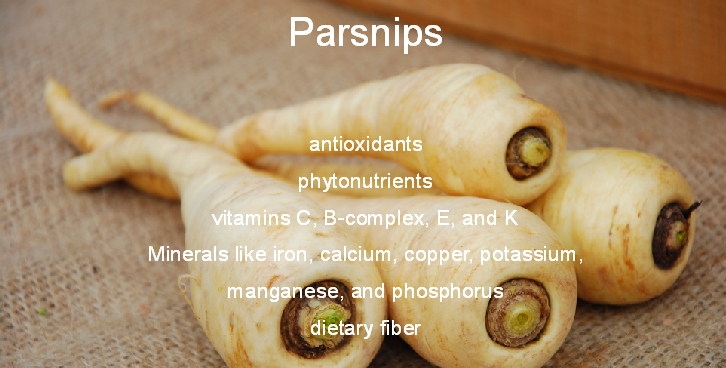
Parsnips are sweet, succulent underground taproots closely related to (surprise!) the carrot family of vegetables.

Store: parsnips in a plastic bag and place inside the vegetable drawer of the refrigerator set between 0°C and 5°C. Do not place raw parsnips in the freezer compartment.

Prep: to prepare, wash them in cold water and scrub or gently peel the skin. Trim off the ends. Cut into cubes, disc, and pieces as you desire.

Tender parsnips can be cooked in a similar way like carrots. Do not overcook; they cook early as they contain more sugar than starch.

Use: Raw parsnips add unique sweet taste to salads, coleslaw, and toppings. Grate or very thinly slice when using raw.

Parsnips can be cooked and mashed with potato, leeks, cauliflower, etc.

Slices and cubes added to stews, soups, and stir-fries and served with poultry, fish, and meat.

Used in breads, pies, casseroles, cakes, etc., in a variety of savory dishes.

Try them: sliced and roasted with coconut oil and sea salt. Once you remove from the oven, sprinkle with cinnamon and then drizzle some raw honey on top. Serve and enjoy!


See the table below for in depth analysis of nutrients:Parsnips (Pastinaca sativa), Fresh, raw,
Nutrition value per 100 g.
(Source: USDA National Nutrient data base)


Principle Nutrient Value Percentage of RDA
Energy 75 Kcal 4%
Carbohydrates 17.99 g 14%
Protein 1.20 g 2%
Total Fat 0.30 g 1%
Cholesterol 0 mg 0%
Dietary Fiber 4.9 g 13%
Vitamins
Folates 67 µg 17%
Niacin 0.700 mg 4%
Pantothenic acid 0.600 mg 12%
Pyridoxine 0.90 mg 7%
Riboflavin 0.050 mg 4%
Thiamin 0.090 mg 7.5%
Vitamin A 0 IU 0%
Vitamin C 17 mg 29%
Vitamin K 22.5 µg 19%
Electrolytes
Sodium 10 mg <1%
Potassium 375 mg 8%
Minerals
Calcium 36 mg 3.5%
Copper 0.120 mg 13%
Iron 0.59 mg 7.5%
Magnesium 29 mg 7%
Manganese 0.560 mg 24%
Phosphorus 71 mg 10%
Selenium 1.8 µg 3%
Zinc 0.59 mg 5%
Phyto-nutrients
Carotene-α 0 µg
Carotene-ß 0 µg
Crypto-xanthin-ß 0 µg
Lutein-zeaxanthin 0 µg
Posted on

The Thanksgiving Proclamation

The Thanksgiving Proclamation

Washington, D.C.

October 3, 1863

By the President of the United States of America.

A Proclamation.

The year that is drawing towards its close, has been filled with the blessings of fruitful fields and healthful skies. To these bounties, which are so constantly enjoyed that we are prone to forget the source from which they come, others have been added, which are of so extraordinary a nature, that they cannot fail to penetrate and soften even the heart which is habitually insensible to the ever watchful providence of Almighty God.

In the midst of a civil war of unequaled magnitude and severity, which has sometimes seemed to foreign States to invite and to provoke their aggression, peace has been preserved with all nations, order has been maintained, the laws have been respected and obeyed, and harmony has prevailed everywhere except in the theatre of military conflict; while that theatre has been greatly contracted by the advancing armies and navies of the Union.

Needful diversions of wealth and of strength from the fields of peaceful industry to the national defense, have not arrested the plough, the shuttle or the ship; the axe has enlarged the borders of our settlements, and the mines, as well of iron and coal as of the precious metals, have yielded even more abundantly than heretofore. Population has steadily increased, notwithstanding the waste that has been made in the camp, the siege and the battle-field; and the country, rejoicing in the consciousness of augmented strength and vigor, is permitted to expect continuance of years with large increase of freedom.

No human counsel hath devised nor hath any mortal hand worked out these great things. They are the gracious gifts of the Most High God, who, while dealing with us in anger for our sins, hath nevertheless remembered mercy.

It has seemed to me fit and proper that they should be solemnly, reverently and gratefully acknowledged as with one heart and one voice by the whole American People. I do therefore invite my fellow citizens in every part of the United States, and also those who are at sea and those who are sojourning in foreign lands, to set apart and observe the last Thursday of November next, as a day of Thanksgiving and Praise to our beneficent Father who dwelleth in the Heavens. And I recommend to them that while offering up the ascriptions justly due to Him for such singular deliverances and blessings, they do also, with humble penitence for our national perverseness and disobedience, commend to His tender care all those who have become widows, orphans, mourners or sufferers in the lamentable civil strife in which we are unavoidably engaged, and fervently implore the interposition of the Almighty Hand to heal the wounds of the nation and to restore it as soon as may be consistent with the Divine purposes to the full enjoyment of peace, harmony, tranquility and Union.

In testimony whereof, I have hereunto set my hand and caused the Seal of the United States to be affixed.

Done at the City of Washington, this Third day of October, in the year of our Lord one thousand eight hundred and sixty-three, and of the Independence of the Unites States the Eighty-eighth.

By the President:  Abraham Lincoln

William H. Seward,

Secretary of State

Posted on

Preparing for Thanksgiving


Thanksgiving! ~ Ordering a Holiday Box with all of the Fresh Ingredients You’ll Need for Your Special Meal 

Thanksgiving is just around the corner! If you haven’t already, it’s time to start thinking about preparing for the holiday! For a day that’s devoted to cooking, eating, family and thinking about what makes you thankful, a little planning ahead goes a long ways in making that special meal go off without a hitch.

We at Klesick would like to be a part of your Thanksgiving celebration by making your holiday planning easy. Every year in November, we offer an additional special: the Holiday Box ($36). The Holiday box, as its name implies, is full of traditional organic Thanksgiving meal items for your celebration. Keep in mind that you can schedule a Holiday Box to be delivered the week of Thanksgiving, but NEW THIS YEAR: you can order a holiday box for any week in November, as well as the week after Thanksgiving (available Nov. 4 – Dec. 5). You can have this box delivered along with your regular order or in place of your regular order (when you place your order please specify).

Along with the Holiday Box, you can order many of the ingredients you’ll need for your  big meal: hearth-baked dinner rolls, bread cubes for stuffing, cranberries, jams, apple butters, pickles and relishes, as well as all of your favorite fresh vegetable ingredients, like sweet potatoes, green beans, and greens for your favorite sides and salads.

Let us source, pack, and deliver your Thanksgiving good right to your doorstep!

An Opportunity to Give! ~ Donating a Holiday Box to Neighbors in Need

In the spirit of Thanksgiving, Klesick is providing an opportunity for you to donate a Holiday Box to the food bank. The season of giving has started, with schools, churches and businesses kicking off food drives that have become annual holiday traditions. While commonly donated foods are high in salt, sugar or calories, these are poor choices for people with high blood pressure, diabetes and other diet-related health problems. We’d like to ask you or your organization to consider giving a box of organic produce this Thanksgiving.

If your celebration includes helping the less fortunate who live in our community, you may order an additional Holiday Box at a discounted price of $26.00. Like our Neighbor Helping Neighbor program, we will deliver donated boxes to the food bank prior to the Thanksgiving holiday. These will become available to add as a donation throughout the month of November. 

–

Holiday Box Menu

Granny Smith Apples, 2 lbs.

Cranberries, 7.5 oz.

Satsumas, 2 lbs.

Breadcubes for Stuffing, 1 lb.

Celery, 1 bunch

Acorn Squash, 1 ea.

Green Beans, 1 lb.

Garnet Yams, 2 lbs.

Carrots, 2 lbs.

Yellow Potatoes, 3 lbs.

Yellow Onions, 1 lb.

–


Posted on

The Kick

This time of year is the best! I love fall. Fall is when farmers, well at least fresh market farmers, are in that part of the race where you start your “kick” to finish the race well. By now most of us have been harvesting all summer and are tired. The summer harvesting is what pays the bills (e.g., weeding, fertilizer, seed, and labor), but now we are heading toward fall.

Every farmer I know has a bead on what the fall will look like in July. We can tell if the crops need water, weeding or some feeding, and based on these observations, reasonable expectations can be drawn. Nevertheless, getting the crops out of the field and into your boxes has a lot of variables in play. For the most part, however, farmers know how the fall is shaping up in July!

After getting through my son’s August wedding, I am turning my attention to the winter squash and potato crops. All summer I have been eyeing those delicatas, carnival, acorn, turbin, two kinds of sugar pie pumpkins and few cindarellas. I love growing squash. We plant it by the handful and harvest it by the truckload. All squash have an amazing yield and a diversity of flavors and cooking methods: baked, pureed, roasted, steamed, soups and pies. Hmm! Hmm! A few more weeks and we will be picking the first squash of the season.

Potatoes are a close second. This year we have four varieties: one yellow, two reds and a purple. Every year I am always surprised by the amount of potatoes under the “hills.” I know I planted them, but it just seems like a miracle every year. The kiddos and I head out and pull up a couple plants and there they are—big beautiful potatoes! The ritual just brings a smile to my face every time we do it. And now that I have a grandson, the tradition gets to continue!

Lastly, we are “harvesting” a new packing and processing facility in the City of Stanwood. It has been in the works for over a year, but it looks like we will be moving to the new facility in October.

Between the wedding and the building, plus all the farming, the final leg of this year’s race (aka, farm season) will surely require a little R&R. I just might need the whole winter to recover. Oops…got caught day dreaming! Back to work—there is still a lot to do before then!

Posted on

Know Your Produce: Dragon's Tongue Beans

Dagon Tongue beans are an open pollinated heirloom variety originally cultivated in the 18th Century in the Netherlands. The bean has a warm cream color with vivid violet variegations throughout its stringless pod. Its shape is broad and the bean measures to an average of six inches in length. The pods are crisp and succulent and bear four to six plump bone white seeds with pink to purple stripes that turn tan with age. The fresh seeds are firm, slightly starchy, nutty and sweet. The entire bean can be eaten raw or cooked. When cooked, the bean loses its variegated colors.

Store: wrap in plastic; refrigerate. Use beans within one week for optimum flavor and texture.

Prep: Wash in cool water. Remove the tips of the bean with a paring knife.

Use: Best raw, Dragon Tongue beans are also excellent steamed, but the color fades during cooking. Perfect for pickling with spices, adds its naturally good flavor to bean salads and stir-fries. Serve simply as a delicious side dish. Its unique color makes this bean an attractive edible garnish and an interesting conversation piece when served to curious guests.

Posted on

Freezing the Summer

The Klesick family has been in full freezing mode for the last few weeks and will probably continue here for the next few as well. Years ago, canners (those people who canned fruits and vegetables) would put up lots of jars for the winter food supply.  People canned meats, veggies, fruit and sauces when the items were plentiful and in season. The canners, for the most part, are a very small component of food buyers today. I know that a few of you still exist, so you can relate when I say that I can barely find a freestone peach to can anymore. Pickles have bucked that trend, however, and are still made every year, but most other canning items have fallen on “hard times.”

Ironically, the practice of canning has declined with our prosperity, stable electricity to run refrigerators and freezers, and a plethora of fruits and vegetables widely available all the time. Except for opening a can of black beans, I hardly even remember using a can opener—and we don’t even own an electric one—but when I was growing up it was the main kitchen gadget. I Still remember watching that can go round and round!

Today the Klesick family freezes and freezes and freezes. We freeze lots of berries, mangos, nectarines, peaches and grapes. The freezer has replaced the shelves of cans! It is not a perfect system – when the power goes out we NEVER open the freezers, and if it looks like it is going to be an extended outage we will fire up the generators.

The Klesick’s cannot be the only family in the off-season that enjoys a splash of summer on pancakes, or in hot cereal, or as a frozen treat. Joelle and I enjoy a green smoothie every morning and those frozen berries with fresh greens transport your taste buds right back to those “chin dripping” juicy peaches and nectarines of summer.

So, from now till the end of August, Klesick Family Farm is running a “Freezing the Summer” special! Check out the offerings in your email inbox, on Facebook and our website, and order a case or two of local summer goodness for your next delivery and start looking forward to winter

Posted on

Know Your Produce: New Potatoes

New potatoes are freshly harvested young, or small, potatoes. They have paper-thin skins and lots of moisture inside, and they tend to be sweeter than older potatoes (in much the same way that freshly picked corn is so much sweeter than cobs that have been sitting around for a few days). New potatoes are pure perfection in potato salads or simply boiled with a bit of butter and a few chopped herbs. Skins that are starting to flake away from the potato are fine – that’s the price of such youth and delicacy! New potatoes are freshly harvested and a bit of dirt just shows that they really are new potatoes and not just small potatoes.

Store: Because they have such thin skins and high moisture levels, new potatoes don’t keep as well as more mature potatoes. Keep them in a paper bag or loosely wrapped plastic in the fridge and use new potatoes within a few days of buying.

Don’t fall prey to the temptation to wash new potatoes before storing them. That bit of dirt clinging to their skins will actually help keep them fresh and any water on the outside will hasten bruising and softening.

Posted on

Stonefruit 101

“Stonefruit” refers to members of the genus Prunus, which includes peaches, nectarines, plums, pluots, cherries, and apricots. The season for summer stonefruit is short-lived, and delicious! With the fruit coming and going so quickly, we don’t want you to miss out by having to toss spoiled or improperly ripened fruit. We’d like to share some info on proper storage in order for you to make the most of these short-season gems.

Care – Store unwashed fruit at room temperature until ripe (usually only 1-2 days), then place in sealed container in the fridge.

Ripeness – Gently press around stem and when flesh gives slightly to pressure fruit is ripe. Stonefruit ripens from the inside to the outside, so if fruit is soft all over it is more likely overripe.

Tips for Preventing Spoilage – Stonefruit’s biggest enemy while ripening is moisture coupled with lack of airflow. Set ripening stonefruit on a cloth or paper-covered countertop or in a place where it gets plenty of airflow. Try setting them stem side down to ripen. This lessens the chance of then rolling and bruising. Once your stonefruit is ripe, it deteriorates very quickly. Within a day of being fully ripe, if left out of refrigeration, you can have overripe/spoiled fruit and some very attracted fruit flies. Check daily and place in refrigerator as soon as you notice the stem area has begun to soften. Take special care when handling your stonefruit – never squeeze to check for ripeness! Even a small bruise will be cause enough to turn into a rot/bruised spot on your fruit as it is still ripening. Check for ripeness by gently pressing around the stem area. It should yield to light pressure.

Use – Once fruit is ripe, and you’ve placed in the refrigerator, plan to use within a day or two (this gives you a total keeping time of about 4-5 days). Stonefruit is refreshing as a healthy breakfast paired with yogurt or hot/cold cereal, as a topping to a green salad, and as an ingredient in fruit salads. For grilling, or for topping green salads: use slightly less ripe fruit, it will hold up better without breaking apart/juicing. Stonefruit also bakes up fabulously into crisps, pies, and sauces!

Posted on

Farming

A few more days and we will be heading to August and then September and then October. This farm season seems a lot longer than years past. Maybe it’s just because the weather this year has felt more out of sorts with it getting hot in May, raining in June, and then blistering in July. I guess it has felt more like August and my farming clock is still adjusting.

Most crops have responded well to the heat, living off some of the earlier rains and our irrigation. The raspberries keep kicking out fruit, the strawberries are coming along, greenhouse cucumbers, peppers and tomatoes are thriving and the green and yellow zucchini are over achievers.

Our late season crops, like potatoes and winter squash, look fabulous, which makes this farmer pretty happy. Now only if the sugar snap peas could have joined that list. Our pea harvest is normally double what it was this year, but with the hot weather the peas set a bunch of fruit and then quit!

The short harvest on the peas, while sad, will give us a little breathing room to catch up on some needed weeding and a little R&R. Hopefully, we can get our family into the canoes and out on the Stillaguamish River, which we find very relaxing, especially if you pay attention to the tides!

And just as that R&R comes to an end, it will be all hands on deck as we begin harvesting green beans! Ironically, we were well into picking beans by this time last year, but our first planting this year never got going during that cold spell in June, so technically, we are picking our second planting with the third well on its way.

Grandma always said, “Don’t put all your eggs in one basket,” and we know that all too well, but that saying’s cousin, “Don’t count your chickens till they hatch,” is the kicker. For us, diversification of our crops helps this farmer to sleep a little deeper as the harvesting and farm season marches on!

I consider it a privilege to grow, source and deliver the freshest and healthiest fruits and vegetables for your family. Your purchases mean a lot to our local network of farmers and their families. Thank you!


tristan-sign

Posted on

Farm Update

This is the part of the season where farmers are planting, weeding, and harvesting as well as planning for the next season. Last week, the harvest rotation was cucumbers, snow peas, snap peas, raspberries and zucchini. This week, we have the same harvesting schedule, but less of some and more of others. Raspberries will taper off, with peas, cucumbers and zucchinis kicking in to high gear. We will also be harvesting red leaf lettuce and kohlrabi and a few bunches of chives and sunflowers. Once the harvesting is finished, we have weeding, and lots of it.

Now we are adding irrigation. Irrigation—some farmers lovingly refer to it as “irritation” J. No water, no crops, no food—funny how that works. Fortunately, our soil has a good water-holding capacity, so we get by with a lot less “irritation” than most folks.

Wedding

Our second son, Aaron, has found the love of his life and asked her to be his wife. We are delighted to add Emily to our family and host their wedding in late August on the farm.

The wedding date has precipitated a change in our annual farm festival, which has traditionally been the third weekend in August. As parents and hosts of our son’s wedding, we have decided to change the festival to a series of educational farm walks and events.

So, in lieu of our annual farm festival, we are hosting two farm tours, a fun run (tentative), our squash fest and a garlic planting day. We are excited to share our love of farming and our farm with each of you through these fun, interactive and informative farm days. Each of the listed events are free to our customers, except the Harvest 5k Fun Run. If your school group, church group, book club, etc. would like to come see the farm on a different day, give the office a call and we would love to schedule a farm tour.

Schedule of farm events:

Friday, August 1st, 7pm and 8pm, 1 hour farm tour with wagon ride through the farm.

Thursday August 28th, 7pm and 8pm, 1 hour farm tour with wagon ride through the farm.

September 27th Harvest 5k Fun Run, supporting the Port Susan Food and Farming Center.

September 27th (same day as the Harvest 5k Fun Run) noon to 5pm. Come and help farmer Tristan harvest winter squash and potatoes.

October 12th Garlic Planting, 9am to noon. It will be a clove-popping, garlic-planting party.

See you this summer,


tristan-sign

Posted on

What Are You Wearing?

laundry soap_cedar & lemongrass

Handmade La Conner Laundry Soaps

Now that you’re on the road to better health by eliminating toxins that go into your body, what about the toxins you’re putting on your body?

Laundry detergents usually contain chemicals that are dangerous to the health and irritating to the skin. A residue of these chemicals remains on clothing after it is washed that then transfers to your skin. Clear evidence of this can be found in scented products, because chemical fragrances would be useless if they were simply washed out. Chemical fragrances are especially bad and are known for aggravating asthma. Laundry product manufacturers sometimes add formaldehyde to their formulas. Formaldehyde is carcinogenic, a skin irritant, and a respiratory poison.

We’ve recently come across a natural laundry soap crafted locally by Handmade La Conner that we are really excited to share with you. These ultra-concentrated laundry soaps are handmade in small batches, absolutely never using fillers, parabens, phosphates, chlorine, artificial colors or fragrances, making them ideal for those who have sensitive skin. They are safe for both septic systems and high-efficiency washing machines.

We are making this laundry soap available to you in these refreshing options: cedar & lemongrass, lavender, sweet orange, spicy citrus, as well as unscented (fragrance comes from pure organic essential oils). Each 16-ounce jar of this powdered soap will wash up to 64 loads of laundry in a high-efficiency washing machine. Order some today and take your detoxing efforts to the next level.

And while you’re at it, don’t forget to check out the natural, skin-loving, earth-friendly soaps and lotions handcrafted by EcoSations available on our website.


Septic Cents™

Septic Cents™ is a liquid enzyme product that stimulates broad ranges of desirable microbe populations commonly found in septic tanks to ensure optimum performance from your septic system.

Benefits of Septic Cents™:

  • Reduces and liquefies contents of your septic tank and drainfield.
  • Reduces build-up of solid organic waste and allows it to flow freely through the leach bed.
  • Improves percolation and absorp-tion many times over, even in clay.
  • Helps eliminate messy back-ups.
  • Cleans and maintains drainfields, septic tanks, cesspools, pipes, and grease traps.

Visit the products page of our website for more information.

septic_cents_sample

Posted on

Berry Time!

The berry season started early this year. I shudder to even mention the weather, but we could use a drink for a lot of our crops, but it would be a disaster for hay farmers and berry farmers now. But it is what it is and if we get rain, great, and if we don’t we will drag out the drip tape and get to watering.

I have already dragged out the drip tape for the strawberries to keep the moisture sufficient to keep those berries growing. We plant a variety called Albion. It is a day-neutral variety, which means that it is not affected by the increasing day length like many of its June-bearing cousins. The advantage of day-neutral varieties is that they produce all season, well into October. The disadvantages are that the fruit set or production and they do not have that classic NW flavor. So we end up picking a little all season instead of a bunch in June.

The June bearing varieties produce copious amounts of strawberries in June and have that classic NW flavor, but are extremely delicate to handle. The disadvantage here is that if it is a rainy June, mold becomes an issue and you can lose a year’s worth of work pretty quick!

While I love the Albion berry for a lot of reasons, I find myself missing the bigger harvest of June bearing berries. So I decided last week to order 3000 plants of Puget Crimson. It is a newer variety developed by WSU for northwest growers. In addition to the Puget Crimson, I am also ordering Black Diamond Blackberry plants to trial them on our farm. We will start with 200 feet and go from there. The Black Diamond is also a newer variety that seems to do well in our climate and to top it off it is “thornless”!

May your health be vibrant and days be merry!


tristan-sign


Local Organic Berries & More!

Blueberry Flats…. Full $38, Half $22

Raspberry Flats…. Full $38, Half $22

Strawberry Flats. Full $36, Half $20

Pickling Cucumbers……. 5 lbs. $7.50

Bulk Basil……………………… 1 lb. $7.50

Green Beans……………….. 20 lbs. $40

Garlic & Dill will also be available – notify us to request some with your pickling cuke or other bulk order!

To place your order, please call our office (360-652-4663) and we will add your name to our reservation list. Once the items are ripe and ready, we will contact you and schedule a delivery. Orders are on a first-come, first-served basis.


Posted on

Bees and Butterflies

There has been a lot of news surrounding the honey bees and butterflies in the agricultural world. Large multi-national companies are spending/investing big dollars into research to figure out why these two insects, primarily honey bees, are dying in droves.

Honey bees are best known for their honey, but their pollination services are the most sought after commodity. It only makes sense that honey bees and Colony Collapse Disorder (CCD) are making headlines and garnering the lion’s share of research dollars.

Honestly—no, bluntly—honey bees and butterflies are really “canaries in the coal mine.” They are bell weather indicators to the health of our agricultural systems. If the health of honey bees is an indication of the health of our food supply, we are in trouble, big trouble.

I would make the stretch to say that conventional or chemical agriculture and most non-organic world farms are detrimental to the ability of honey bees to survive. American farmers have plenty of toxic options to kill pest, weeds and anything else they don’t want competing with their crops, and, unfortunately, there are no selective insecticides. Farmers just kill the good and the bad and wreak havoc on the balance of nature. And really, there are no bad or good insects, they each provide an important ecological function, just some insects are more desirable or beneficial in our minds.

I would contend that we are not going to solve the plight of the honey bee, butterfly or the thousands of unnamed insects until we embrace the problem. The honey bee die-off is the symptom, much like heart disease is a symptom. The solution mostly lies in changing how we farm, not changing the honey bee.

Large chemical companies are lining up to “help” solve, in my opinion, the very problem they have created with the production of their chemical products. It is, at best, an expensive public relations campaign or possibly some form of mitigation. I have little faith that the research will yield actual solutions because that would require these companies to go out of business, which is not an option for them.

Just maybe, if the American public wants to save the honey bee, it might inadvertently save itself because the only thing that is going to save the honey bee is a change in how we farm. One thing is for sure, improving the health of the American people has not proven itself to be a big enough driver to elicit the change, but maybe the honey bee will have enough sting to make it happen!

The other way to save the honey bee is to continue to do what you are doing now—supporting local farms that value all life and raise food that doesn’t support the chemical companies.


tristan-sign

Posted on

Plenty of moisture around here!

Every crop needs a few necessities to get off to a good start. Soil: it holds the nutrients like Phosphorus, Manganese, Magnesium, Nitrogen, Boron, Calcium, etc. Soil critters: microbes, fungi, earth worms, beetles, spiders, bees and other creeping, sliming and crawling critter that digest decaying matter or breakdown minerals so the plant can utilize the nutrients to grow. Sunshine: everything loves a few heat units. Water: check that off the list, until August!

In our micro climate, we can really assist the crops we grow by amending our soils with nutrients in the form of compost or mined minerals, like calcium, through soil sampling and application rates. We can also inoculate our fields with good bacteria and fungi that help the plants thrive. We can do as little harm as possible to earthworms, beetles and spiders by not spraying our fields with herbicides, pesticides, fungicides and bactericides. We can also help the critters help the plants by not overtilling or overcultivating our fields.

When it comes to soil and soil critters, we can treat them alright and have a measure of control. But when it comes to sunshine and water, we barely have an “oar in the water” to guide that boat! The greenhouses can help, but sunshine is still needed to generate some heat. We don’t use propane or lights in our greenhouses. Propane and lights can mimic natural sunshine, but they come with their own environmental impacts and expenses. Have you ever tried to heat a 1000 sq. ft. space to 70 degrees with 1/16th of an inch of plastic between winter and the crops? That is a sure fire way to “burn” some dollars up. For us, we use them as season extensions to try and capture a little more warmth as spring comes on or fall leaves us.

But water, that is completely outside my control. Yes, we can irrigate a little in the summer, but for the most part we work with what falls from heaven and is conserved in our soil. Our soils have great moisture holding capacity (a.k.a., clay!). They are slow to dry out, which is a great attribute in August, but fairly detrimental NOW! Ideally, I would have some sandy soil for the spring crops and some of “heavier” (clay) soils for the summer/late summer crops when a lack of water is an issue. But alas, I have heavier soils, which makes springs like this one very challenging.

But the good news is that we have perennial crops, like tree fruit, berries and a few greenhouse crops, to offset a wet spring, but we will need a warm summer to catch up. It is going to be a good year for our vegetables.

Farming for the future,

tristan-sign


Posted on

Living a Giving Life

I have been thinking about the act of giving. Giving is an opportunity to participate in making some thing, some place or some one’s circumstances better than could be accomplished by itself. Giving requires sacrifice, a lot or a little, but you have to be willing to deny yourself something in order to give.

This past week, the world celebrated Easter—a holiday to remember the resurrection of Jesus. Nothing has more radically impacted the world than His birth, ministry, death and resurrection. He is the ultimate example of giving.

We believe in giving. And we believe the act of giving, whether money, talents or time, is freeing. It reminds us that we are not the most important entity in this world. It changes our focus. It intensifies our senses and awakens us to the needs of others and other things. Giving also allows us to give more, and it is contagious and infectious. Being generous is a surefire way to live a happy life.

This is why, when an opportunity to give arises that we can participate in, we are all in, in whatever capacity we can participate. But we have had to learn where to draw our giving boundaries over the years. Here is what we have learned about giving:

1. We have planned giving and then we dig deeper for emergency giving.

2. We always pray for whatever the pressing need is.

3. Then we assess how we can help. Is it with time, knowledge, communication, money or all of the above?

4. Sometimes we are unable to participate because of location or skills needed.

5. If we cannot help physically at the location, that is okay. Help comes in many different shapes, sizes and methods, and all of it is needed.

6. Refer to #3 and decide what you can do and then do it with all your heart!

Lastly, we are grateful and thankful for your partnership as we reach out to the Oso and Darrington communities. As a group we are able to collectively do more than as an individual, but community can only happen when two or more agree to walk together.

Thank you for walking alongside us to help Oso and Darrington land on their feet again.

Tristan