Posted on Leave a comment

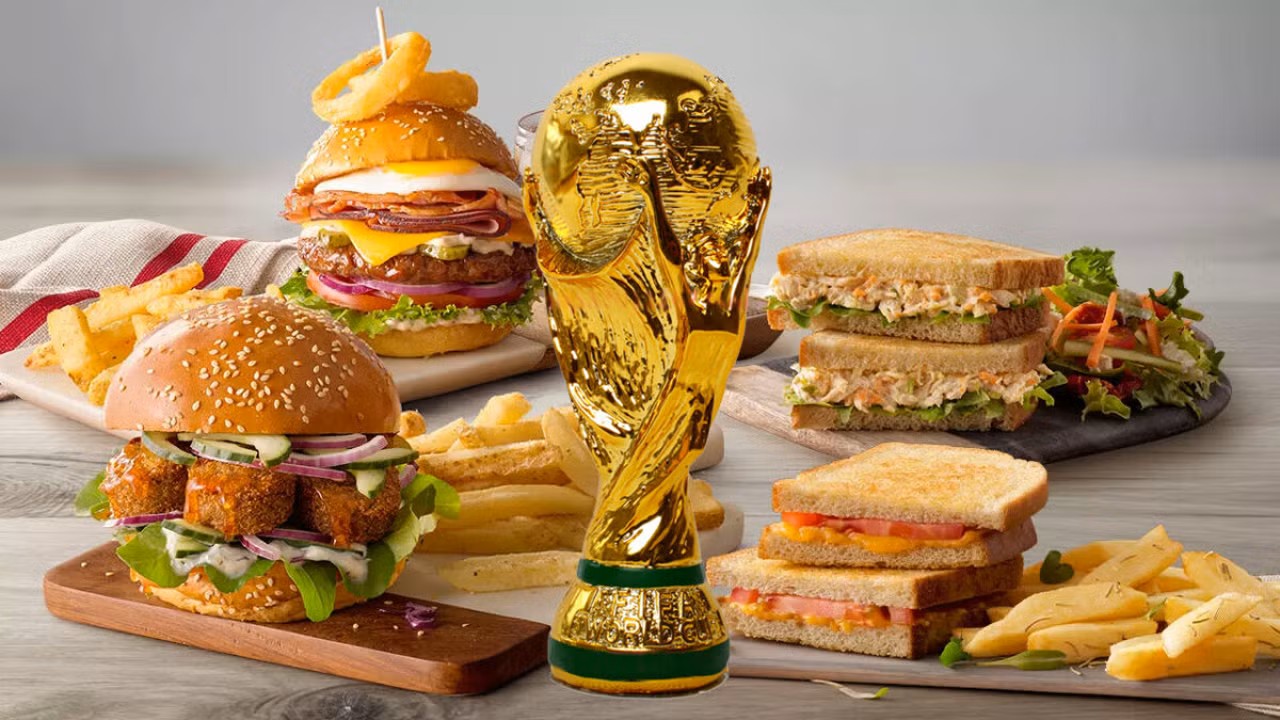
The FIFA World Cup of Food

It’s hard to ignore the pressure building around the Puget Sound region as we anticipate the start of the FIFA World Cup in June. Seattle is hosting 6 games across 3 weeks, and the city has pulled out all the stops. You know it’s a big deal when Seattle is forcing pauses on all construction projects and roadworks during the next month, requiring roads and sidewalks to be cleaned up. I have a handful of friends who have traveled all over the world to attend the World Cup, and now it’s right in our backyard. 

I have been playing soccer for over 30 years, and coaching off and on for 15 years, while hosting weekly adult drop-in soccer, playing in leagues up and down the I-5 corridor, playing under a street lamp in a parking lot, or playing on a slanted dirt field in Mexico with a ravine running down the middle. I walked down the aisle of my high school graduation with my soccer ball, wrote a love poem for my English class about my soccer ball, and brought a soccer ball to every class my senior year. Needless to say, I was very excited when it was announced that Seattle would host World Cup matches.

This particular World Cup, however, has made it plainly obvious that FIFA, the organization behind it, is less interested in providing a valuable game of soccer and a good matchday experience for fans and supporters, and far more interested in offering an “exclusive” product and fleecing as many people along the way as possible. FIFA doesn’t provide the best soccer; they provide the best marketed and most expensive soccer. They are firm believers in “more” quantity, not more quality.  And sometimes we confuse “best marketed” and “most expensive” as “best quality”. Oh, but how wrong we are! FIFA has become a conveyor belt: low-quality soccer wrapped in world-class marketing and sold back to fans increasingly priced out of the experience. Right now, the cheapest ticket for a 90-minute match between United States vs. Australia is $1,200, before parking, food, taxes and fees are added. Good luck taking your family to a game! Once the FIFA conveyor belt is in place, its purpose is simple: grow endlessly. More tournaments, more teams, more host countries, higher ticket prices, larger licensing deals, bigger sponsors. Fans and supporters increasingly feel less like participants and more like fuel for the machine.

Unfortunately, the US didn’t win the bid to host the World Cup because we were the best fit; we were the only other bid. Countries are catching on that hosting the World Cup is not as great an investment as it was originally marketed. The host country takes on all the risks, and FIFA contractually takes home all the rewards. It’s less about soccer, supporters, or kids and families seeing their home-grown players, and more about keeping the existing Machine running. Where else have we seen this pattern of institutions becoming so large that they no longer serve their original purpose? Tech? Healthcare? Finance? Agriculture?

How similar our current food system works, with many “FIFA’s” funneling and shoveling “food substances” down a complex system of distribution. Modern food is barely “grown” anymore, having been replaced with food that is “made”. There are literal and national distribution conveyor belts designed to feed more products that appear to be food, to a population that’s forgetting that food was supposed to nourish you. The food giants ask, “What else can we easily shove down this conveyor belt?”, rather than, “What would be good for the person at the end of this conveyor belt?” The FIFA World Cup of Food looks like Nestle, Unilever, Sysco, Kraft Heinz, General Mills, Tyson, JBS, Kroger, Coca-Cola, or Danone, and that conveyor belt is not stopping until you decide to get off. They are winning at a game designed to make you lose. The house always wins. The only way to win is to stop playing the game.

One of the best games of soccer that Emily and I got to attend was a non-league match between two local no-name teams on the outskirts of Manchester. We just walked up to the entrance gate and paid cash, barely any, for seats right up against the field. We could nearly touch the players warming up on the sideline and hear the mud squish under their cleats. We were surrounded by tons of families, little kids fetching stray balls during warm-ups, and entire youth soccer teams coming as a group after their own game. We didn’t pay for parking, the bus was $3.00, and there was no traffic. There were no TV crews or commercial breaks, and we didn’t have to go through security or pay for a clear plastic bag for our belongings. We didn’t have to download an app, or sign up for an account, or agree to let them siphon all the personal data from our phones in order to email us “other events you might like in the area”. That soccer game was designed for us and our enjoyment.  Real food feels the same way that little soccer match did: local, imperfect, accessible, human, and built for the people participating in it. The good news is that getting off the conveyor belt is entirely in your control and usually starts small: buying from someone you know, cooking one real meal, supporting local growers, or gathering around a table instead of a brand or a drive-thru. 

~ Tobin Fekkes

Posted on

Artificial Ingestion: Your Food and AI

It seems we can hardly go a day without hearing about some newfangled way that Artificial Intelligence is going to take all our jobs, then give us lives of all play and no work, then ultimately end humanity as we know it. Whether we like it or not, we now have new terms to keep track of like AI, GPT, LLM, Copilot, Gemini, Grok, and Claude.

When people talk about AI, what they’re really talking about are Large Language Models, or LLMs. Literally, large models of language. These models consist of a massive corpus of text (think all of Wikipedia), which are then distilled into “tokens” made up of each little variation of letters and symbols. Then count, sort, and categorize those tokens, and you’ve got yourself a Large Language Model.

How did we get here?

In 2018, a little-known company called OpenAI released a Large Language Model called GPT1 to little fanfare, then followed that with GPT2 in 2019. These first two models were largely focused on text prediction, or as Google says, “they excel at generating coherent, human-like text from prompts”. Pay attention to that wording: generating; coherent; human-like. The world really took notice during Christmas break of 2022 when OpenAI graced us with GPT3. It was no longer just some math whizzes and programmers building a text-prediction and translation tool. LLMs would soon be shoved into every nook and cranny of every piece of software you’ve ever used, whether you asked for it or not.

How does it work?

Imagine taking a batch of Wikipedia articles on the history of the United States, and cataloging how often each word appears,  how likely each word is to appear next to other words, and in which order. Next, use those probabilities as weights to predict the next word in a given sentence. Now, do that over and over and eventually you can generate a new wiki, but for, say, the history of Canada instead. What you will end up with is a document that reads like a plausible and grammatically accurate article, but with gaping holes in accuracy. However, these gaping holes will only be recognizable to those who know their Canadian history. To the untrained eye, the article will initially feel like it has substance, texture, story, meaning; as if you’re learning so much about Canada without trying very hard! How convenient! Upon closer inspection, you may be disappointed to find out that many of the facts, dates, and stats in the History of Canada are not, in fact, real. ChatGPT even states this right up front: “ChatGPT can make mistakes.” It’s a black box that gives you what it thinks you want, rather than what you need. It breaks down our language into its base parts, and then reconstructs a plausible facsimile, the mere appearance, of the real thing.

How about another example?

Let’s say you gave the entire Shakespeare catalog to an LLM, then said, “generate another play”. It’s true that our new generated play would have similar words and structure of Shakespeare, the plausible flow of a classic play, the recognizable roller coaster of emotions, and character development to boot. However, it would also lack intentionality. It would have all the literary aspects of a masterpiece, except the integrity, the substance, or the taste. It would appear delicious to the eyes and ears but would be bland to the heart and soul. A document with big words, but lacking nourishment. Masquerading as something that it’s not.  Sounds a lot like our food labels.

Why do I tell you all this?

We’ve lived this world already, but with our food system. We already know how this play ends. Our food system is designed to break down our food into its base nutrients, and then design, stack, and build back up the perfect ratio of what will look good, taste sweet, last long, transport safely, and store easily. After all that is complete, it also needs the appearance of “food”. Just look at a label for coffee creamers, protein drinks, nut butters, salad dressings, or any snacks. This system, taken to its extreme, looks like food that has very little in common with what our body needs; Instead, it is food that is very expensive, food that we have no say in, and food we don’t know or even recognize. Eventually, we will be unable to recognize the difference between what is “real” food and what is “generated” food. Worse still, we may be unwilling to care.

But our story is not done being written, and we still have a choice. We can choose not to attend that play, and instead write our own play, with more taste. Eating local food is the best way to know your food and your makers and growers, and ensure the food is actually real.           

~ Tobin Fekkes

Posted on

Dying of Convenience

box of good dying of convenience

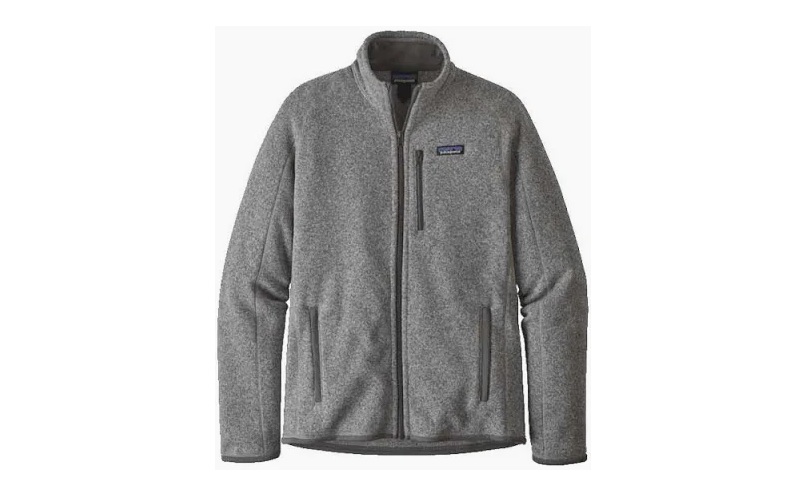
I have a favorite sweater that is head and shoulders better than any other sweater, and so much so, that I point out to Emily anytime I see another version of my sweater on a stranger out in the wild. It’s a little game I play. It’s similar to when someone in my family starts driving a new vehicle, and suddenly I start recognizing all the other people in our town that also (apparently) just started driving the same vehicle! Of course, people have been driving that vehicle for ages, long before I paid attention to their choice of transportation. But once you see it, you can’t unsee it.

There’s another area I play this game, although much more niche than sweaters or vehicles. I’m sure we’re all familiar with the popular saying, which states that the three most important things in real estate are “Location, location, location”. However, I’ve noticed a disturbing trend where this does not hold up. As I started to catalog more and more instances, a curious truth revealed itself. Just like I catalog and point out sweaters to Emily, now I catalog and point out locations that are in seemingly prime locations, but are instead either dead, or a revolving door of attempts to not be dead. Do you ever see an empty lot, or an abandoned building, or a space boarded-up, yet it’s right on a busy intersection? Or it is just next to the offramp of a highway? Despite having all the signage, all the visibility, all the access, it still cannot catch a breath of air for more than a few months before shuttering. Then a new tenant comes along, perhaps after being told by the property broker that “location is everything”, yet  a year later, it’s gone. Why is that? There are many locations off the top of my head that fall into this category, on Camano Island, Bellingham, Smokey Point, Seatac, Everett, Burlington, Stanwood, Lynnwood, etc, etc, etc. The actual city is not important, since it is not isolated to any specific legislation, ordinances, tax codes, or county laws. It’s much deeper, and more fundamental than that.

In addition to trees and mangoes, one of the things I love most in life is Bell Curves. And these abandoned storefronts and restaurants in primo locations follow a bell curve also: the bell curve of convenience. They were choked by the excess convenience. On the left side of the bell curve of convenience, it is very difficult to start a store, restaurant, or business in the backwoods, way off the beaten path. As you approach the middle of the bell curve, it is very valuable to be in a visible, convenient, accessible location where your mere presence does the talking. However, “more” is not always “better”, and increasing in convenience starts to have diminishing returns as you roll down the backside of the bell curve. A one-lane intersection with a roundabout or a four-way  stop is very accessible because there are natural breaks in traffic. When an intersection becomes so crowded that it needs a turn lane in the middle, or two lanes both ways, or a median down the center, things go downhill quickly. Now the road has become so popular, so convenient, that it has become very difficult, even dangerous, to get in and out. Perhaps you can only get in one direction and go out in only one direction? Perhaps you can only enter one way but exit through another place? Perhaps, like the grocery store near me, there’s a high chance of dying anytime you go near any of the entrances! When a location becomes too convenient, it cuts off the air supply of the nutrients it needs to survive, and it either becomes increasingly expensive to maintain, or it simply starts to wither away. The oxygen it needs, namely people, are unable to access it any longer. Pay attention to the overly convenient real estate near you. Maybe you’ll notice some that die from excess convenience.

How similar our food supply has become as we have sacrificed the essential nutrients our bodies need in exchange for convenience stores, fast food, easy bakes, quick mixes, and instant pots. Fresh, local, organic, and un-processed food is the “slow food” we need to keep the supply of nutrients our bodies need to be healthy, active, and long-lasting.

Tobin

Posted on

The Best Things Are the Ones You Weren’t Looking For

Emily and I spent Father’s day with her family perusing around a used bookstore, and not just any used bookstore. The kind of bookstore where you must be careful where you walk, and keep your arms in tight, lest you knock over piles of books. I was not successful at this, as simply brushing one stack of books created a domino effect with the nearby stacks of books. And trying to fix that stack inevitably knocked over another stack. Thankfully, the owner was all too familiar with the commotion coming from my corner of the shop, and I did not get a talking-to. Every ledge, every nook, every spare inch on floor is covered with stacks of books, and only loosely organized or categorized. One block away, there is a very well-known bookstore that gets plenty of publicity, is centrally located on the main street, and is very organized. The aisles are clear, the signage is prominent, and the books are categorized, new, and neatly facing outward. And I find it terribly sterile, and even a bit boring. The books are exactly where you would expect them to be, the titles are about the same. I can easily find exactly the book I’m looking for, but it’s unlikely I’ll stumble upon an even better book that I wasn’t looking for. A book I wish existed for my little niche of hobbies, but didn’t know someone else had that hobby too, and enough to bring it to print. Often, the joy and connection we have with something has less to do with the actual content or substance, and more to do with the way we discovered the thing. 

My wife and I have strong ties to London through family and friends. Emily did her master’s program in London, and my family lived in Manchester for 4 years while my dad got his PhD, so we make it back over the pond to visit as often as we can. The streets of London are perfectly suited to exploring via bicycle, because there is no grid system, it’s mostly flat, and it’s very densely populated. The density allows for many little cities within the cities, where the culture and feel of the place changes every few blocks. This increases the ratio of discovery, as you never know what’s around the next corner, and the streets aren’t laid out in an “expected” formation. There is no point of reference like a mountain or an ocean to keep you oriented, the streets are straight, and the buildings are tall enough to block your view of the one defining feature: the Thames River. But even that is not straight, so it will easily leave you disoriented. Because of this, two of my favorite spots to visit are special to me purely because of how I discovered them. One day, I was riding my Santander bike around London, and I had not looked up where I was nor where to go. I just followed the flow of the streets and what looked interesting up ahead. The worst thing that could happen is I return my bike to the nearest Tube station and find my train back home. After riding for awhile, I stumbled across an amazing outdoor market. A quasi-European Pike Place Market, but with less Starbucks. Amazing food stalls, fresh produce, all the international treats you could ask for. I always return there. Later on, I discovered this incredible collection of little pedestrian streets that all fed into a central hub, filled with food courts, tea shops, alleyways, and little shops you’d never find anywhere else. There was character, there was a sense of place, and there was uniqueness, there was a reason to be there. I felt like I found a little secret gathering place, tucked in the alleyways, away from the hustle and bustle of 9 million people right nearby. 

Some of my most memorable foods, recipes and meals and follow this pattern of discovery, as I’m sure yours do too when you stop and think about them. Emily and I had banana cream pie at our wedding because my grandma made them important to me. We have tea and chocolate at night because my parents did. My favorite meal is Dutch pancakes because my dad made them for us on our birthdays. I’m always on the lookout for a Chinese porn bun because as a kid, my aunt and uncle lived 4 hours away, and we met them in the middle at a Chinese restaurant. My grandpa made nasi goreng because the Dutch adopted it from Indonesia, and he made it for my dad, and then my dad made it for us. There are foods that I think I’m sure I would not like, nor even try, if I had discovered them by myself, or in different circumstances, or with different people (or no people), or different times in my life. But some of my favorite foods are tied to the way I discovered them. This is encouraging to me because it infers that we have a certain amount of control over what we like to eat. We are not simply born with foods we like, and foods we don’t. Sometimes, we like foods because of how they came to us, not because of what they are.  

Some of you already experience this “discovery” when you open your Box of Good without looking at the week’s menu beforehand. Some of you are scared to death when you get an item in your box that you don’t know what it is, why it is, or where it should go. I would only encourage you to create a memory around it; ask a friend for a recipe, have neighbors over and try out your new dish, ask us for some tips and tricks, or just venture out on your own and discover how it works best for you. You just might discover that you like it. 

~ Tobin Fekkes 


Posted on

How to Use Your Box of Good

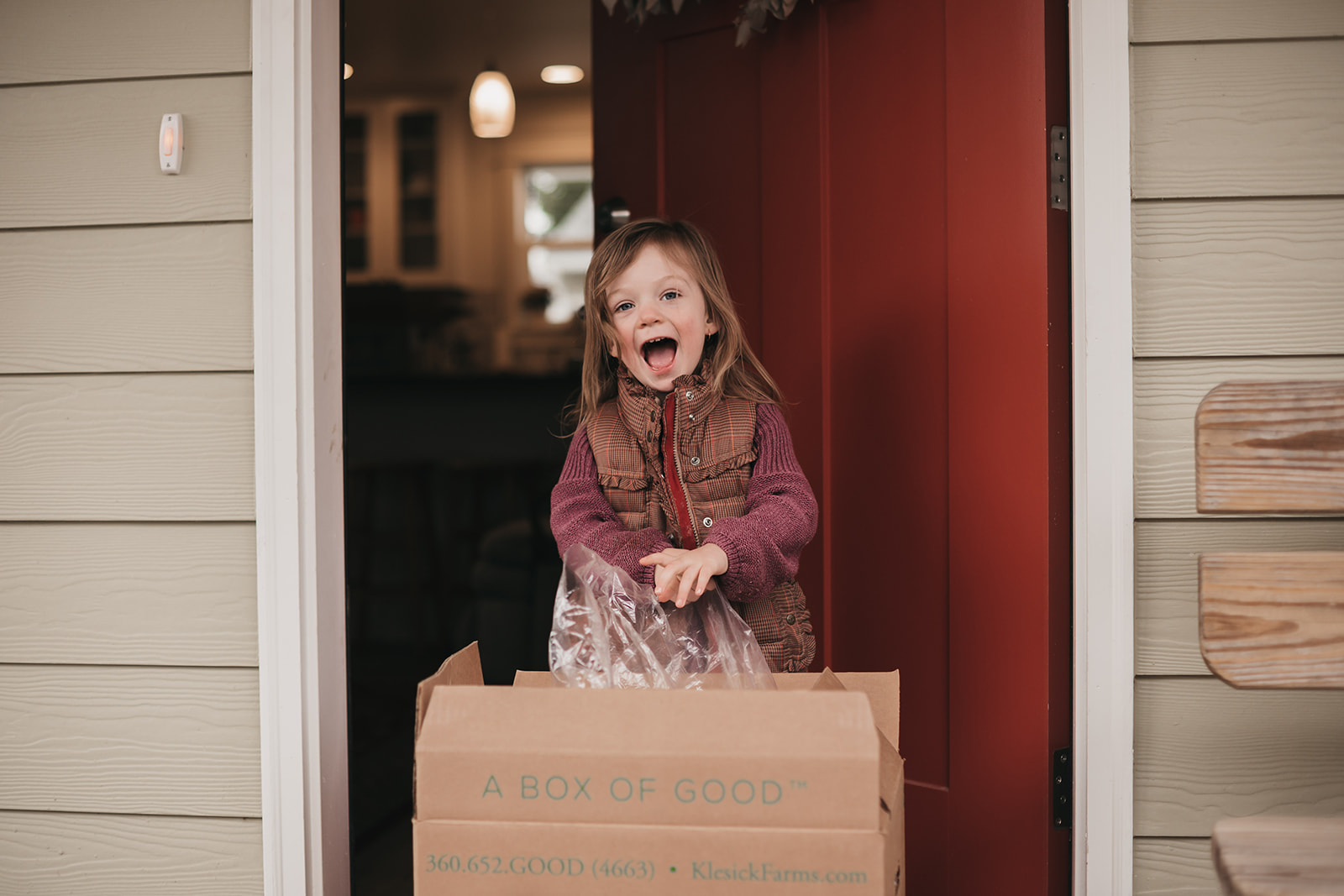
Girl getting home delivery of box of good organic local home delivery of produce in seattle washington

Working with What You’ve Got: Have you found yourself having to alter your meal planning during this stay-at-home season?   We have a few tips we’d like to share that could help simplify healthy eating during this crazy time.  As a matter of fact, we think you might even take a few of these ideas with you into the future.  

Some of our favorite recipes aren’t really recipes; they’re techniques. We love things like soups, stir-fries, roasted vegetables, salads and smoothies!  Once you understand the premise of creating each of these, you can alter the ingredients, use what you have on hand, and still come up with a delicious outcome!   

Soups: With soup, start with a good broth or create one as your base. Decide if you’d like to make a clear soup, a cream soup or a puree.  Clear soups will use the broth as the foundation and then vegetables and seasoning to taste.  Cream soups often use milk, cream or even cream cheese blended with a portion of the cooked vegetables.  Purees are smooth, thickened by blending things like potatoes, cauliflower, rice or beans.  Use salt, pepper and your favorite seasonings to finish to your taste. 

Stir-fries: Stir-fries are so versatile!  We use stir-fried vegetables as a base to go with meat, beans or vegetarian meals.   They’re great in wraps, over rice, with pasta or with salads.  Start with dicing your vegetables small!  We find that everyone eats more veggies that way.  Heat oil in a heavy skillet or wok, add minced garlic, ginger, onion, and chilis (if desired). Add protein, vegetables, salt, pepper and seasoning, and sauté until cooked to your preference. Use taco seasoning for Mexican dishes, Italian seasoning for pasta dishes, Asian sauce or spice to be used over rice.   

Roasted vegetables: Roasted vegetables are a favorite comfort food and so quick and simple!  No recipe required, and virtually every vegetable can be cooked in this way.  Root vegetables are old standbys for roasting, but you can also roast broccoli, cauliflower, zucchini, peppers and onions. Start by cutting vegetables into bite size pieces.  Toss them with a mild non-hydrogenated oil, sprinkle with salt, pepper and seasoning of choice.  We use lots of garlic powder!  Spread them on a baking sheet and give vegetable pieces lots of space.  Roast at 425 degrees until veggies get a bit charred around the edges.  Some vegetables are cooked much sooner than others.  Start with the root vegetables and then add softer vegetables a bit after, or roast like veggies in separate baking sheets, to easily take out when finished. 

I think everyone is familiar with the versatility of salads.  In addition to mixing up your salad fixings, try different homemade dressings as a great way to add variety! 

Smoothies: Smoothies are a super way to get a boost of extra nutrients and have so many possibilities! A kid favorite is always peanut butter-chocolate banana.  We start with a big handful of spinach leaves (shhh!) blended with coconut water, then add frozen bananas, peanut butter, a high-quality chocolate protein powder, and milk.  You can also add collagen, flax oil or whatever supplements that blend well and don’t over-power.  Frozen strawberries, blueberries and bananas are great to have on hand and combine well with leafy green vegetables.  A favorite of mine combines frozen banana, strawberries, avocado, spinach, kale, juice from hand squeezed lemon and oranges, turmeric, and ginger, blended with coconut water.  Give different combinations a try.  

Rest assured; you can use what you’ve got, and it’s going to be good!

Posted on

Consistent, Yet Never the Same

Many years ago, I came across this lecture on the patterns and styles of architecture through the ages. Of course, I can’t for the life of me find it again, not even with the Mighty Google. The main point of the lecture was that the prominent pieces of each generation of architecture, the ones that stood the test of time both physically and emotionally, were both consistent and variable. The columns of stone had consistent spacing, but they also had offsets from each other to create a sense of depth. Mosaics and frescos had intricate designs with distinct lines to create order, but with sweeping beauty in curves and chaotic color. Windows, statues, paintings, and domes had their own balance of organization with artistic freedom. Order and Chaos, balanced. When the pendulum swings too far to the Order side, things become predictable, robotic, mundane, and we lose interest. However, when things swing over into Chaos, things become tumultuous, confusing, lawless. We like a degree of certainty, but not too much. We like an ounce of chaos, but not too much. The things that hold our attention, indeed, those that give us awe and wonder, are ones that are larger than ourselves, outside of our direct control, but still follow an unpredictable pattern. 

It’s likely that, on first glance, we think of things being both Consistent and Variable much like oil and water; they don’t mix. How can something be the same and different? But in fact, the world around us is in a constant state of consistent variability. The waves crash on the beach consistently, day and night, but with varying frequency and intensity. We can’t say whether this wave will be bigger than that wave, but we know the waves are coming. The clouds roll in with some semblance of certainty, but not so much that we can bet the farm on it every day. The wind blows through, and the trees move mostly as expected, generally, but not exactly. We know what wind does, but we can’t know what it will do next. The four seasons come and go with a degree of predictability, but not so much that we can know exactly what any one day will be like. Our galaxy’s stars would be boring if they were laid across the sky as predictable as a city block in New York City, like when you fly to a major city at night and descend amongst a million little stars in a neatly packed grid. How many hours we have wasted invested staring at the flames in a campfire, drawn to the beauty of the current flame, waiting expectantly for what the next flame will do. Knowing the flame will come, but not knowing what form it will take. How similarly we behave around lightning strikes and thunderstorms! Even snowflakes fall consistently, but never the same. We can know that a leaf will fall, but we couldn’t reliably pick where on the ground it will land. When something balances a healthy dose of structure with a hint of uncertainty, we are drawn in.  

Thankfully, our food follows the same patterns of Order and Chaos. We know that too much order in food and too much automation in food production creates “things” that are frighteningly identical in size, color, and shape. When our food becomes too predictable and formulaic, then it’s a good sign that it’s not meant for us. Things like frozen pizzas, cookies, snacks, and pre-packaged vegetables have a heavy dose of “order”, while things at the drive-thru and county fairs lean towards chaos! I love our fresh bread from Rachael because every loaf is just a little different.  

A good rule of thumb to use with the food you eat is to make sure it has both Consistency and Variability. Shout for joy when two peppers are oddly shaped, when squash are different sizes, and bananas are different colors. Be thankful that head of broccoli will take some knife skills, and the carrots aren’t as straight as they could be. That’s how you know your food wasn’t optimized for packaging, nor is it fit for pig food. Right in the middle is food that’s fit for you to eat. 

May we spend more hours gazing at the stars, listening to waves crash on the beach, watching the clouds drift by, following the dance of a fire, and creating and cooking our own food.  

Posted on

Stomachs over Storage

A couple years ago, a friend of a friend (and fellow Box of Good recipient!) was moving her small business to Snohomish, and she contracted me to set up all the technology for her new retail store. Before the computers, printers, Wi-Fi, POS station, credit card readers, and receipt printer worked, we needed to get a new internet router. So I went where everyone else goes, and headed to our local family-owned shop around the corner called Amazon. I picked out the right router that covered the appropriate square footage of her store and purchased it on a Thursday afternoon, around 1pm. I only needed it to arrive at her store by Monday to start setting up shop. But later that afternoon, she texted me to say that the router arrived at the new store! I was flabbergasted. 

While this complex system of distribution works great for consuming more and more cheaper items, it’s not such a great system for food that we actually consume. A router is not bothered by sitting on a shelf for a year, or in a container for 6 months, or a ship for 3 weeks. Nor do cell phone chargers, tires, a broom, a book or a rowing machine! My 94-year-old grandpa just bought himself a rowing machine from Amazon on his cell phone, delivered to his nursing-home “studio” in 3 days, because it’s still not too late to start something new! How long was that rowing machine waiting on a shelf for him? Who knows. 

Unfortunately, we’ve made our food system more like our non-food system, rather than the other way around. We’ve pushed too hard on the “convenience” button and tried to make every food item available all the time in whatever quantity we can dream up. Prioritizing food for storage and transport has come at the cost of the very nutrients we should be consuming. Too often, the same nutrients that our bodies desire also make food expire, but those are replaced with items that enhance their shipping and storage lives. If we were blindfolded and released into a grocery store and told to grab a handful of items, it’s more likely that your shopping cart would be full of items designed for the shelf, not for yourself. The main intention behind the shape, color, texture, presentation, density, price, and ingredients of each product is that it needs to be in a truck, freezer, cooler, warehouse, or storage for an unknown amount of time. It’s made to sustain the temperature changes, shaking, and squishing, rather than sustain our stomachs. 

But fresh local produce and grocery items flip the tradeoffs in our favor, so the nutrients we crave are left in the food, and the costs of a complex storage system are removed. The single-use plastic is eliminated, the gas and electricity are minimal from storing and moving items around between distribution centers. The fresh bread in your Box of Goodis baked by Rachael the morning that you receive it. The raw milk in your delivery comes from Tilly the day before you receive it. The bar of chocolate is made by Kevin the same week you receive it. The kale and carrots are grown by Ray and John, picked a day or two before you get it. The blueberries from Karen are picked a day or two before you eat them. That’s why I can’t eat just one pint! 

A famous person once said, just because it’s possible, doesn’t mean it’s beneficial.  

Posted on

Life of Pie

The Food and Drug Administration publishes the changes to our nutrition laws on their website, and it can be a dull read sometimes. Each year, the FDA makes changes to the National Register, which makes them part of the Law across the Land. I don’t know many people that keep up to date with the FDA regulations, so you’d be forgiven for missing the FDA alterations amongst other things like Twitter changing their name, or the Paris Olympics memes, or any other Very Important News®. Most years, the FDA makes a dozen or so updates to the food regulations, but so far in 2024, there have only been 3. We are 1) reducing sodium use, 2) updating “health” claims on yogurt, but the most riveting one is 3) revoking the standards for frozen cherry pie. What?!? 

In 1967, the FDA made a proposal to regulate the Standards of Identity for frozen cherry pies, meaning that the public was confused about what was and was not a frozen cherry pie. More specifically, the public was not sure whether the sweetener in the cherry goop was artificial or not.  A solid four years later, the proposal was finalized in 1971 and ever since then, we’ve had nothing but perfect frozen cherry pies. In 2020, the American Bakers Association (who else?!) petitioned to revoke the Standards of Identity around frozen cherry pies, asserting that “that non-standardized fruit pies have been sold throughout the country for many years without any evidence of public confusion”. So in March of 2024, the FDA relaxed the rules on frozen cherry pies, saying “the standards are no longer necessary to ensure that these products meet consumer expectations, and revoking the standards will provide greater flexibility and the opportunity for product innovation”. Keep an eye out for some innovative frozen cherry pies coming to a retailer near year! 

As we head into fall, we’re entering peak pie season. The usual pie suspects make this season go ‘round. The classic apple pie, pumpkin pie, pecan pie and chocolate pie are never far from reach. Or you can go the savory route and make sausage pies, delicata squash pies, turkey pies from Thanksgiving leftovers, cheddar pies, chicken pot pies. Quiche is even a pie! And don’t forget custard pies, meringue pies, or sweet potato pies. You name it, you can make a pie out of it! A pie is like the soup of the oven: throw all your extra ingredients in a pie crust, cover it with something, and bake it off! No one will be sure exactly what is in it, but it will taste good! 

If pies are not your thing or you need to be pulled away from the pies, Box of Good will begin offering nutritional classes In October. The class will be once a week for 5 weeks, and it’s a combination of 1 part nutritional education, 1 part sugar detox, and 1 part support group. Laura Conley is a Functional Nutritionist and will be leading the class through education around digestion, healthy fats, the impact of sugar and refined carbs, and how to fight back with whole foods, preferably local and organic when available. To register, look for more info on our website and the space will be limited. We will offer both daytime or evening classes to fit flexible schedules. 

A quick way to summarize the class is a great quote from author Michael Pollan: “Eat food. Not too much. Mostly plants.” 

Posted on

Too Big To Follow

Every once in a while, a phrase makes it into our global lexicon. These phrases are usually tied to an event or time that we all collectively associate. We can often remember exactly where we were and what we were doing. I remember learning a new phrase soon after September 11th, 2001, where all the newspapers and TV shouted “Shock and Awe” on repeat. I’d never heard that before, but suddenly, it was everywhere!  

Shortly before that, we added the “Dot-com Bubble” to reference the fall-out from very speculative tech companies after reality settled in that they may not be as important as they thought. Then we added “Great Recession” and learned all sorts of fun new financial words like derivatives, credit default swaps, and subprime. Without wasting time, we quickly added “Occupy Wall Street” and “Top 1%”. Then we moved on very quickly to “Black Lives Matter” and “Cancel Culture”. Finally, we’ve rounded out the last four years with a plethora of phrases regarding “Social Distancing” and “Flattening the Curve”. 

One interesting thing reading these phrases is that you can often recognize feelings, images, thoughts, or memories surrounding those very phrases, without me providing any further context whatsoever. With just a few words, we can all remember a singular season of life and where we were or who we spoke to. I remember exactly where I was for the first videos of 9/11, as well as when Washington State went into lockdown (if was half-time of my soccer game!).  

My favorite phrase is “Too Big To Fail” because it is accurate enough to cover all sorts of time periods and events. It’s a timeless truth that can apply to the railroads in the 1800s, the oil companies in the 1900s, the car companies after that, then the telephone companies in the 80s, then finally the banks in 2008. Even now, we could still apply it to the tech companies of 2020s, or CrowdStrike in July 2024. We could even apply it to the United States itself across many individual decades. We could also apply it to the Romans, the Dutch, the British, and many other empires in between. The underlying sentiment is that something becomes so critical, so dependent, that even if it fails (and fails those that depend on it), it lives on. Very few other aspects of life get to operate in this spectrum. When my peach tree gets too big, too heavy, too far out from its trunk, and I don’t trim and thin it, the roots give out and it naturally snaps and falls over. As it should, since it can’t support its own weight. Last week, a couple of famous arches in the Utah desert collapsed, and we, so far, have not spent a billion dollars to prop them back up to maintain an unsustainable structure. 

Eventually, some companies become a little too big, a little too important, a little too dependent, and a little too extractive. The tides slowly turn from producing lots of value for the local economy, to gradually sucking all the value in a larger and larger radius. When a company starts taking more value than it produces, people are left wondering where it all went, and is it still worth it to maintain it? The cure for this lose-lose situation is to notice these patterns early, get off the train at the next stop, and decide that these companies are Too Big To Follow. 

In late 2023, Seattle’s local organic chocolatier, Theo’s, was merged into the massive American Licorice Company. To “ensure the future of the company”, they closed their original Seattle manufacturing plant, laid off 60 of the people that got them there, and moved the operations out east. Meanwhile, our friendly account rep that worked with us turned into an automated inbox, our chocolate shipped from the East coast instead of Seattle, and the bars arrived further and further after their production date. They published an eye-opening press release of how they became too big and had to cut ties to their roots. That’s how trees fail too.  

We will always operate “upside-down” and when something gets Too Big to Follow, we’ll go the other direction and look local, look small. Next week, we will begin offering Miodo Chocolate, from our own backyard of Camano Island. Our friend, Kevin Miodonski, has been making single-origin, small-batch, dark chocolate for over 20 years. Our new fresh bread starting this week from Water Tank Bakery follows a similar pattern, from a small local baker using all Northwest ingredients to get bread to your door right after its baked. Stayed tuned for more hyper-local producers of honey, pasta, meat, pizza dough, salad dressing, hummus, even dishware and nutrition classes! We’re gearing up for a full harvest season!  

Posted on

Cream on Top

Greetings and salutations from Tobin and Emily! We’re beyond grateful for the opportunity to serve all our local families with fresh local food, and we couldn’t be happier to be “back in the saddle” at Box of Good. 

Between the two of us, we’ve been raised in a long line of gardeners of veggies, herbs, and flowers, even berries and orchards. With all that food to harvest, it also brought with it a lot of canning, pickling, juicing, jamming, pressing, and preserving. I’ve had many late nights with the kitchen windows steamed up from the pressure pot and water bath, preserving that day’s harvest.

My grandparents moved to Camano Island from Kodiak Island, Alaska in 1977. My grandma, Vivian, was an avid gardener, so much so that when she was done managing her own garden in the morning, she would come over to our house and manage ours too! I would race to get my school done early so that I could go outside and join her.  

When my grandparents passed away 10 years ago, I was fortunate enough to acquire their home and keep it in the family. With that came a box of original pictures of them tilling and forming and shaping the barren grass slopes into neat aisles of raised beds. Then they planted a group of saplings for the start of an orchard. Those trees are now so large that I can barely keep up with trimming them! 

A few years before passing, Vivian planted a frost peach tree in the garden, and that has been my favorite and best-producing tree each year. Like clockwork, the first 3 weeks of August will be overflowing with peaches, and I know I need to be in Canning Gear or else I will lose out on that harvest. There are so many fun things to do with peaches, especially when they’re coming out of your ears.  

One of most satisfying things about the canning process is the “click” you hear when the jars start to cool off from the water bath. The lid pops into place. That’s how you know you got a good seal. However, if you have 10 jars on the counter, you can’t tell which one popped, specifically. However, a successfully sealed jar will cause all the peaches to rise to the top, leaving a few inches of peach syrup at the bottom. I think this is amazing! Naturally, the best bits always rise to the top! 

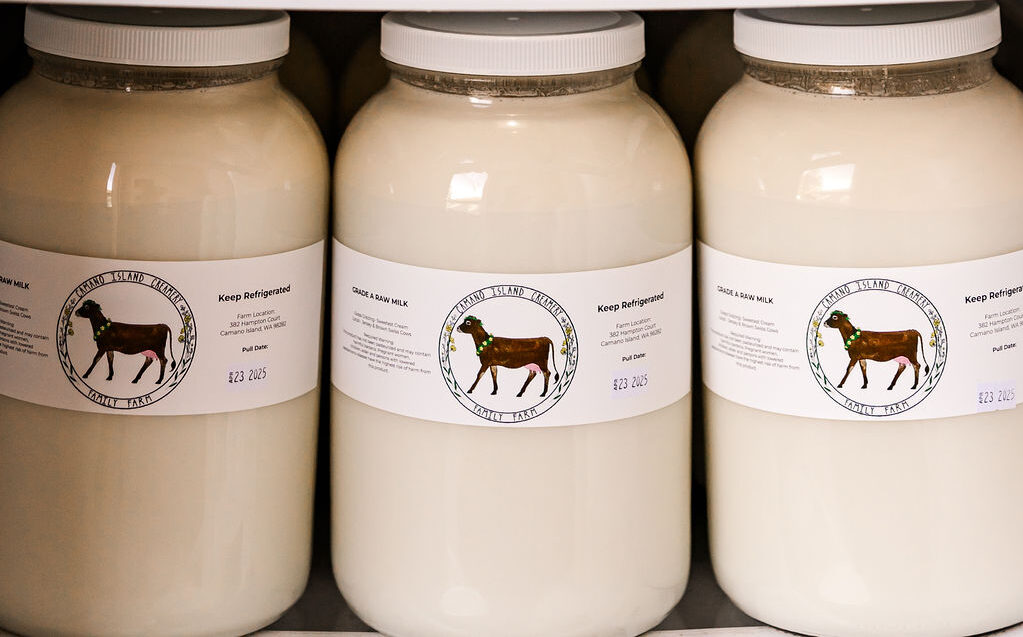
There are other things that rise this way, as well. Raw milk still has the stuff that conventional milk only dreams of: cream on top! In July, we started partnering with Justin and Katrina Seckel at Camano Creamy to deliver super fresh, local, raw milk. They got into dairy farming because of a similarly long and storied family lineage of dairy farmers paving the way for the next generations. I love seeing all the milk jars come and go with the thick layer of cream, naturally rising to the top. You can make your own butter or ranch dressing or clotted cream with raw milk, because the richest, creamiest part of milk always rises to the top. 

Rising is also the main feature of a yummy loaf of bread. Watching dough rise and rise, over and over, as you knead it into shape. As we prepare to start offering fresh local breads (teaser!), I’m again reminded that natural things rise, organically, without anyone telling it what to do. The best rises to the top. 

Of course, that makes one ponder the reverse: which things in life don’t obey this natural law? Do all the inorganic structures and complex systems and institutions that we humans create follow suit? Does the “cream of the crop” also naturally rise to the top of the systems we’re in control of? Or do we surpress the cream from rising to the top of our own systems in order to squeeze out more and more of a quicker, cheaper solution? Perhaps we’d get better results in our diets, districts, or diplomats if we choose to play in arenas that allow nature to take it’s course more often, where there’s space to grow slowly in their own way, rather than dictate an unnaturally quick pace for a subpar harvest. 

When my grandparents moved to little ole Camano in ’77, they barely knew a soul here. But they found a modest home to move into and good community. My wife and I get to enjoy that home 50 years later. A home that was built by a close family relative of Justin and Katrina Seckel. Good things take time. 

~ Tobin Fekkes

Posted on

“Welcome” 

                                                              Week of August 1, 2022        

With some of you new here, we’d like to share with you a few things to help you get to know us better, and also give you some important information that relates to your delivery.   

Tristan and Joelle Klesick have been providing home delivered, organic, produce locally since 1998. During the local farming season, they grow vegetables in the beautiful Stillaguamish Valley at their home farm, Klesick Family Farm, as well as source fruit and vegetables from a variety of PNW farms. They see you as partners in the important task of being good stewards of the land, and keeping local farmland viable for the next generation! You will have an opportunity to hear from them, along with our helpful staff, in the weekly newsletter, via recipes, produce tips, and farm and health musings!   In order to meet all of our customers’ produce needs, we also source produce year-round from warmer regions. All of our produce is always certified organic and GMO-free! We also carry a large variety of organic and natural grocery items, including local dairy, meat, pies, kombucha, eggs, soaps, coffee, meal kits and more! We’d love for you to be able to eat healthily and locally, while creating more time for you to pursue the things you love to do!  

Be sure to check out our “How to store your produce” section on our website. We’d encourage you to use reusable produce storage bags or containers. We also have plastic and biodegradable bags available for purchase. Taking care to store items in their ideal setting is key to their longevity. Our aim is to send out only the highest quality produce. If you ever receive something upon delivery that is sub quality or you are missing an item, please let us know and we will credit your account or send out a replacement with your next delivery.  

When you’re done unboxing your produce, fold up your box and put it out the morning of your next delivery, and our driver will pick it up. We reuse our boxes to minimize waste.  

Be sure to follow us on social media, and read our emails for specials and seasonal offers. You may also like to check our website on Friday afternoons to get a sneak peek at what’s coming in next week’s boxes.  

If there are produce items you just don’t care for, or you have food allergies to certain items, no problem. Just call or email to make a substitution to your box, for only $1 extra. You can also add an item as a “never send” to your account; meaning if that item is ever on the menu for your box, we will “never send” it to you and will make a substitution for that item.   

Creating a custom box of items that you know you’ll love is also a great option. You can go to our website, click on “Shop” and simply select the items you wish to purchase and add them to your cart. You can also set that up as recurring, so you can have the items in your cart come automatically each week. The options are endless! You have total flexibility with when and how much produce you receive to best fit your family’s eating habits.  

Please note that from the “Deliveries” page in your account, you can add, edit, remove, or adjust your delivery up until 8am two days prior to your delivery. Please call or email for any late changes.  

If you still have questions, be sure to check out our FAQ’s page. If you’re just not sure how to best order for your family or would prefer to talk it over with us, we’d love to help you with that. Don’t hesitate to contact us for any reason through email, phone or the address listed below.  

Once again, thank you for choosing Box of Good for all of your produce and healthy grocery needs. Eat well!  

-Alaina Klesick, for the Box of Good Team  

Posted on

The Shift is on! 

This has certainly been one of the most challenging starts to a farm season we have encountered. We intentionally started later this year, apparently it wasn’t late enough. We are starting to see crops emerge and get established. Our initial waterlogged plantings have been weathering the onslaught of colder and wetter than expected weather with grace and are starting to respond, to at least, warmer rain! 

The only critter that is really happy is slugs! Thankfully the slugs have not been a problem for our crops, but Joelle’s flower beds have been their primary target. The slug issue is primarily a perennial plant’s nightmare. In the fields we work up large swaths of land that disrupts their habitat, but flowers and berries where they are in same place for multiple seasons tend to create nooks and crannies for them to hide. But I digress. 

From our inception, we have always been a conduit to healthy farmers for you. We consciously chose to work with our neighboring farms and not to grow everything on our farm. Being vertically integrated has its advantages but also its challenges. We run a modified vertically integrated business, with a farm and our home delivery distribution business, but we are primarily a home delivery company.  

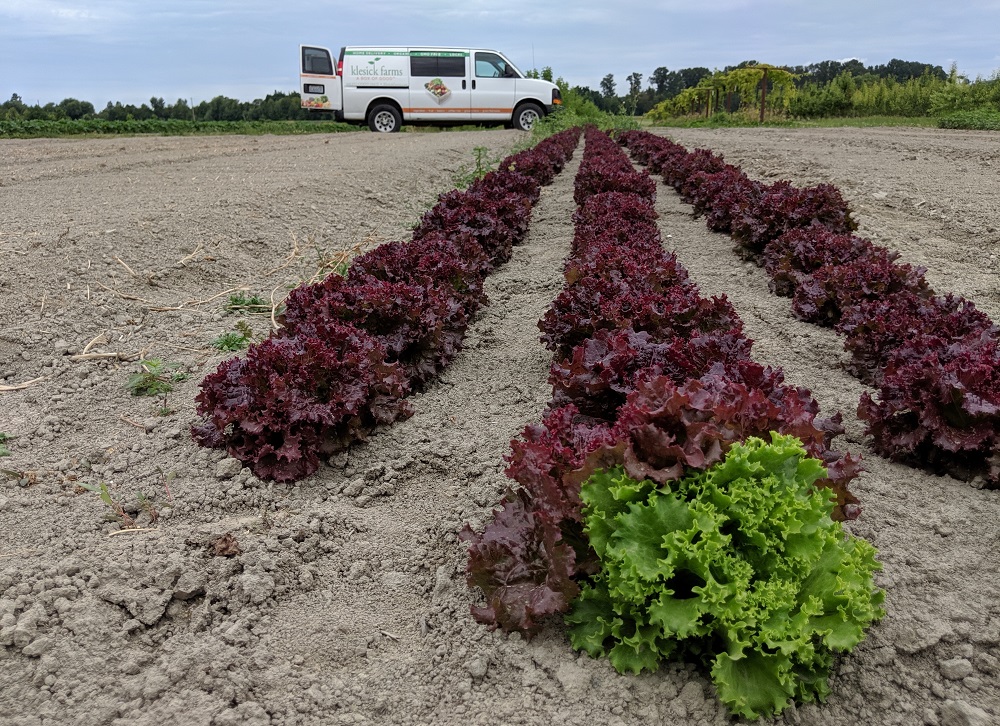
I do scratch my itch to farm by growing lettuce, cucumbers, onions, squash, beets and a few other crops for your family. But our primary focus is on being that conduit of good food from farmers who grow organically and deliver their produce to you. 

Every week we talk with our network of local farmers and our suppliers to build our weekly menus. Our focus is always on locally produced food first and then we branch outside our regions to supplement our offerings. We will never be a 100% locally grown company. Bananas, citrus and mangos are some of our most popular produce items, so we source them from organic farmers to add them to the Box of Good. 

With that said, our product shifts as the seasons shift and for the next few months till October-ish the Box of Good will become more local and our menus will be featuring many vegetables and fruit from our network of local farmers. And yes, while this farm season is off to a painfully (wet) slow start, we are seeing more and more local produce coming onboard, which means the shift to local is on! 

During this season we become not only your source for quality organically grown foods, we become your source for a lot more locally organically grown organic produce.  

Enjoy some of the healthiest and locally grown produce, 

Tristan 

Posted on

Local Farm Highlight

We are excited to be able to offer local blueberries from Hazel Blue Acres for the next few weeks. This week they are featured in some of the boxes as well as being sold as add-ons! You can purchase extra blueberries by the clamshell or by the 1/2 flat. Just email us or add them online via boxofgood.com. We love being able to support the local farms around us! 

A Quick Storage Tip for Your Blueberries!

Hold off on washing your blueberries until you are ready to eat them. If you wash them and then let them sit in the fridge they will get mushy fast! So be sure to put them in your fridge, unwashed and then wash them off with cold water before you enjoy! 

A Quick Storage Tip for Your Chard!

The chard in your box this week is right out of Klesick Family Farm’s field! Do not wash your chard until you are ready to use it. Store it in an airtight container or bag. When you are ready to use it, run it under cold water, but do not let it sit in the water, as that will result in the loss of water-soluble nutrients!

Meal Kits – Kindred Kitchens

We have worked with Kindred Kitchens to bring you four more meal kits! Our new meal kits are Chicken Enchiladas with Spicy Black Beans, Chicken and Mozzarella Ravioli with Alfredo Sauce, and two types of Spaghetti, one with Gruyere and Garlic Sausage and one with Apple Chicken Sausage. The meal kits come with four generous serving, easy to put together and work great for a busy day! My kiddo’s favorites are the Creamy Chicken Pesto and the Chicken Enchiladas. It always takes the edge off a busy day when we come home to a simple meal kit! You can add one on to your existing order or just order a meal kit by itself!

Issues With Your Order?

Just a reminder that if you happen to have any issues with the way your order was packed or delivered, we want to know! Please call 360-652-4663 or email us at [email protected]. Sammy, Kelsey, and I are more than happy to help resolve any issues. If you receive  an item that is poor quality sending us a quick pic of the product will help us with quality control. Of course, we also love all your kudos! We appreciate ALL feedback and we believe it makes us a better company!

If we can assist in making your ordering process easier, help you create a custom order, assist with substitutions, just let us know!

We are here to help!

-Alaina

Posted on

Growing and Changing

Tristan and I are grateful to get to live and work at such a beautiful place. 18 years ago we were looking for a place that we could live, farm, and run the business. Farm ground was the first priority because that’s the one thing that can’t really be changed or remodeled. When we stumbled upon this place it was “a tear down”.  It had good growing ground, an outbuilding we could work with and the house had good bones. We had no idea what we were getting ourselves into! Through a lot of blood, sweat, and tears (and prayer), we made it our own! 

Klesick Family Farm grew from a vision to create a lifestyle of learning for us and our kids! We saw the value of both working hard and playing hard, of adventuring and creating! Over the years we’ve fueled our kids interests by helping them find resources to blossom in those areas. We’ve had kids take on chickens, honey bees, milk goats, a milking cow, beef cows, draft horses, dog training, flowers for fundraising, event planning, hay-baling, welding, restoring tractors and they’ve managed crops from start to finish. They’ve had great opportunities that have grown and stretched them. Over the years our farm has morphed and changed as much as our family has! Interests have come and gone and six of our nine children are grown and are writing the next chapter of their lives.  But we share memories and we’re enjoying the opportunity to share farm life with grandkids! 

During this season we’re focusing on growing vegetables and don’t have any animals on the farm except our family dog and cats. 

Farm life is a lot of hard work, commitment, and unpredictability! Neither of us grew up farming. We’ve had a lot of learning curves along the way! We’ve had both crop failures and bountiful harvests. We LOVE providing food that’s nutritious and healthy for our customers and the planet! But I think it’s the journey that really keeps farmers growing! Farming isn’t as much an occupation as it is a lifestyle. Our family has been shaped by it. It’s not for everyone. But farmers need people who appreciate their product in order to keep growing! We are thankful for each of you and that you’ve joined us in this journey! 

Follow us on Facebook or Instagram and watch our stories for extra glimpses into what’s happening on the farm this season! 

-Joelle

Posted on

#celebrate #healthychoices #boxofgood

Each day there’s a new opportunity to pursue healthy choices! But what is a healthy choice? That’s not an easy, one size fits all, answer! When we’re presented with a choice that affects the health of our body, mind, spirit, or environment, and we choose the greater good, we’re making a healthy choice! I love the idea of celebrating each little step we take, acknowledging the good, knowing it brings us that much closer to creating healthy habits that can last a lifetime! 

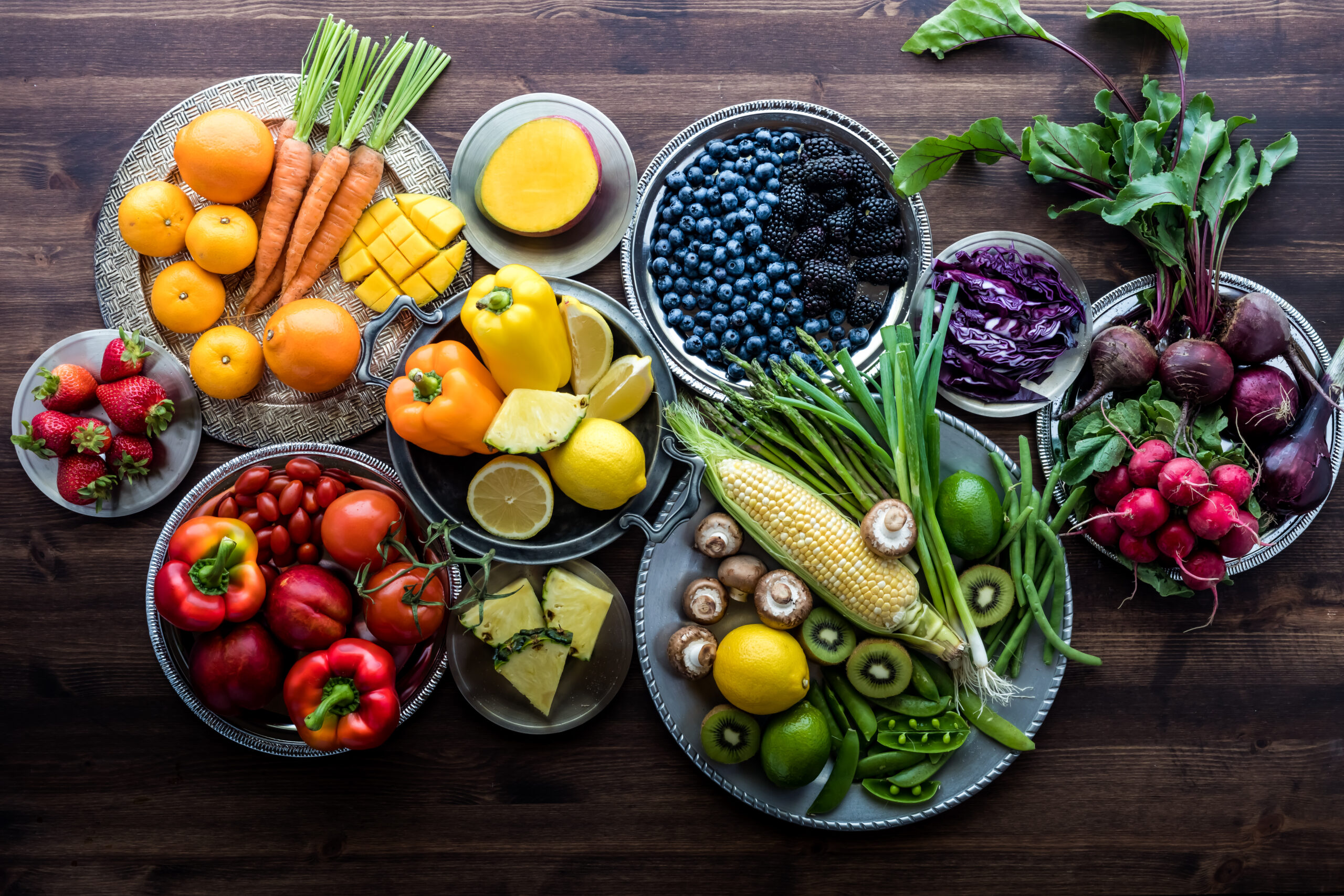
A specific healthy food choice for some might be to eat 80% organic in order to cut out chemical pesticides and herbicides! A plan to make that happen could include being intentional in both food purchases and meal planning. Another healthy choice might be to add a greater variety of vegetables to one’s diet and focus on “eating the rainbow”. The fridge would need to be stocked full of several colorful choices and a goal could be to eat 3-4 different fruit or vegetables at each meal! Your Box of Good can help with that!

We can all be more mindful of our food choices but be careful not to judge others and don’t judge yourself! Negativity never sets the stage for victory! Let enthusiasm for the good choices inspire! Some people have bought the lie that what’s healthy won’t satisfy, but that can’t be farther from the truth. As we pursue healthy choices and experience the satisfaction associated with it, dopamine and serotonin are released; two types of neurotransmitters in the brain. Both are associated with happiness. They empower us to continue to make healthy choices!

What other areas besides food do we make choices that affect our health? Don’t let it overwhelm you, but the possibilities are endless! Consider some of these. We can take time to sit, pray, meditate, and just breathe. Be in the moment with those we love! Express gratitude. Pay attention to sights, smells, sounds all around! Learn to laugh at ourselves. Say something kind to a stranger. Shake up our daily routine and add a little adventure. Take time to both move and strengthen our bodies. Drink more water. Take quality supplements. Get sunshine and fresh air. Take a nap if needed. Organize and minimize “stuff.” Clean up after ourselves. Complete a project. Do something creative. Volunteer for a noble cause. Be helpful to someone in need. Plant something. Reduce, recycle and re-use. Support sustainable practices. Learn something new. 

So many opportunities to choose good! Let’s be intentional with our health, cheer each other on and watch the overall health of our community grow!

Have a wonderful week and thanks for choosing a Box of Good!

-Joelle 

Posted on

Butter Nut Forget to Spread Some Cheer!

I don’t know if it’s because I am a Pacific Northwest grown girl or what, but each year when autumn decides to roll around, I feel like I come alive. Maybe roll around isn’t the right word though – autumn usually appears very fast out of nowhere! And she’s so beautiful, because despite the fact that leaves are dying, plants are being pruned, and there is an all-around passing away, the world feels so fresh and vibrant. It reminds me to look at what habits of mine are not serving me well. That way I can shake them off and try something new. Autumn reminds us that even amidst death, there is also hope and color as room is made for new life.  

I have found that because of covid, and life’s struggles in general, many people right now are experiencing that sense of death, or loss – be it a season of life, a career, or a relationship. There are people in our communities and lives who could use a friend. And just maybe, we are the one equipped to bless and reach out to them! I would encourage you, sage that I am (haha, just kidding), to take a look around you. There might be someone in a season of change who you can share some of that hope and life with.

Speaking of changing seasons, let’s all give another hip hooray for it being squash season. Am I right? Squash is exciting to me for two reasons: it’s delicious and smooth, and it’s easy to cook! Literally. Just cut it in half, brush some butter on that baby and sprinkle it with salt. Then roast it at 425 degrees until it’s golden brown, and BAM. Pure golden goodness. This week, our menu is featuring petite butternut squash from the farm, thanks to Tristan and John’s hard work growing them. Alaina was just cooking one the other day (so yummy). She commented that the butternut squash tasted like a cooked nut, and I thought, “Well, it’s probably called butternut for a good reason, then!”. Kinda funny when you think about it – it’s not often a food is named for how it tastes.

As you probably know, butternut squash is super versatile to cook with. Being a more starchy vegetable option, this makes it very filling to eat. It’s also high in some key nutrients like vitamin B and C, potassium, and beta carotene. Plus, they store for quite some time if kept in a cool, ventilated place. In fact, that’s why our winter squash assortment is such a good deal! It’s 35 lbs. of squash that you can just keep in your garage as you use them over time, all delicious varieties. Check it out on our website! And lastly, as always, know that we so appreciate each and every one of you.

We hope you have a joyful and blessed week!

-Joanna Pruiett

Posted on

Salad

Enjoy summer’s local harvest salad-style!  Organic salads are the perfect summer meal!  They’re cool and light on a hot day (it’s coming!).  You don’t have to heat up the oven or stove top and you can prepare most of it ahead of time and be ready with a nutritious meal after a long day of work or play!  

There are basically 5 types of salads with endless possibilities.  There’s the green salad, the fruit salad, the rice and pasta salads, bound salads, and the dinner salad.  Each uniquely highlights different produce items perfectly!

The green salad is often referred to as a garden salad and usually consists of lettuce, spinach or leafy greens of any sort.  It’s often topped with a vinaigrette or light dressing.  In American restaurants we’re usually served green salads before a meal.  In some European countries the green salad is served at the end of the meal and thought to improve digestion.  Maybe we pick to have it first so that we’re sure to eat it before we’re too full! Some parents pick to serve salad first, because the kids are more likely to eat it if it’s served before carbs.

Everyone loves a delicious fruit salad!  There’s no fussing to get kids to eat it and could be added to every meal or as a dessert!  Fruit is high in fiber, vitamins, and antioxidants and has a low energy density level.  There’s no right or wrong way to create a fruit salad. Simply chop up and put together your favorites! Adding a little lemon, orange or pineapple juice to your fruit salad will help keep the colors of the fruit bright and prevent them from browning. Fruit salad is best consumed shortly after preparation to maintain freshness.

Rice, quinoa and pasta salads are a great base for adding all sorts of diced up veggies, increasing the nutritional value of your more filling meal or side dish.  They can be prepared ahead of time and will even take on more of the flavors as they rest in the refrigerator for a bit.  If you dice up the veggies small, you can keep them raw and pack in a lot of nutritional density, filled with lots of beautiful colors, and yummy crunch!  

The bound salad generally is made of hearty, non-leafy ingredients bound together with a thicker dressing and can even keep its shape if scooped with an ice cream scoop.  Bound salads are often used to make a delicious hearty sandwich by topping a piece of whole wheat bread with a scoop of something like a chicken salad or chickpea salad and topping it with lettuce.  Or a bound salad could be a side dish of potato salad, combined with a variety of veggie crunch!

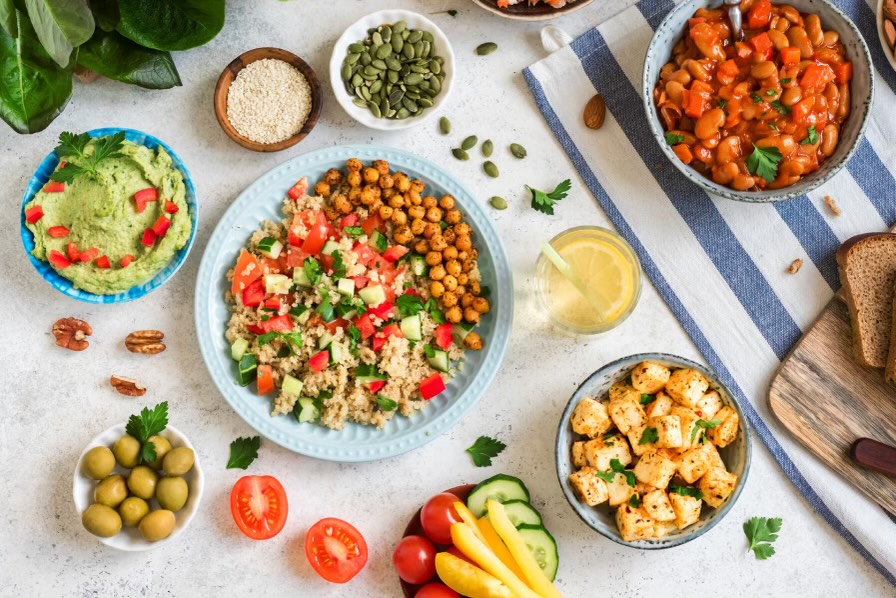
Last but not least, is the dinner salad.  The dinner salad is a hearty stand-alone that fills your plate with a combination of delicious and nutritious produce items and usually includes an added protein. Some popular dinner salads include taco salad, Buddha bowls, Asian salad, salmon salad, but the sky’s the limit! Variety is also multiplied when you factor in salad dressings! They deserve their own spotlight and we’ll talk more about that later!

We’d love to see some of your favorite salads and be inspired by your creations!  Share on social media and tag “Klesick’s” and we’ll reshare for all to enjoy!

Joelle Klesick