Posted on

Cream on Top

Greetings and salutations from Tobin and Emily! We’re beyond grateful for the opportunity to serve all our local families with fresh local food, and we couldn’t be happier to be “back in the saddle” at Box of Good. 

Between the two of us, we’ve been raised in a long line of gardeners of veggies, herbs, and flowers, even berries and orchards. With all that food to harvest, it also brought with it a lot of canning, pickling, juicing, jamming, pressing, and preserving. I’ve had many late nights with the kitchen windows steamed up from the pressure pot and water bath, preserving that day’s harvest.

My grandparents moved to Camano Island from Kodiak Island, Alaska in 1977. My grandma, Vivian, was an avid gardener, so much so that when she was done managing her own garden in the morning, she would come over to our house and manage ours too! I would race to get my school done early so that I could go outside and join her.  

When my grandparents passed away 10 years ago, I was fortunate enough to acquire their home and keep it in the family. With that came a box of original pictures of them tilling and forming and shaping the barren grass slopes into neat aisles of raised beds. Then they planted a group of saplings for the start of an orchard. Those trees are now so large that I can barely keep up with trimming them! 

A few years before passing, Vivian planted a frost peach tree in the garden, and that has been my favorite and best-producing tree each year. Like clockwork, the first 3 weeks of August will be overflowing with peaches, and I know I need to be in Canning Gear or else I will lose out on that harvest. There are so many fun things to do with peaches, especially when they’re coming out of your ears.  

One of most satisfying things about the canning process is the “click” you hear when the jars start to cool off from the water bath. The lid pops into place. That’s how you know you got a good seal. However, if you have 10 jars on the counter, you can’t tell which one popped, specifically. However, a successfully sealed jar will cause all the peaches to rise to the top, leaving a few inches of peach syrup at the bottom. I think this is amazing! Naturally, the best bits always rise to the top! 

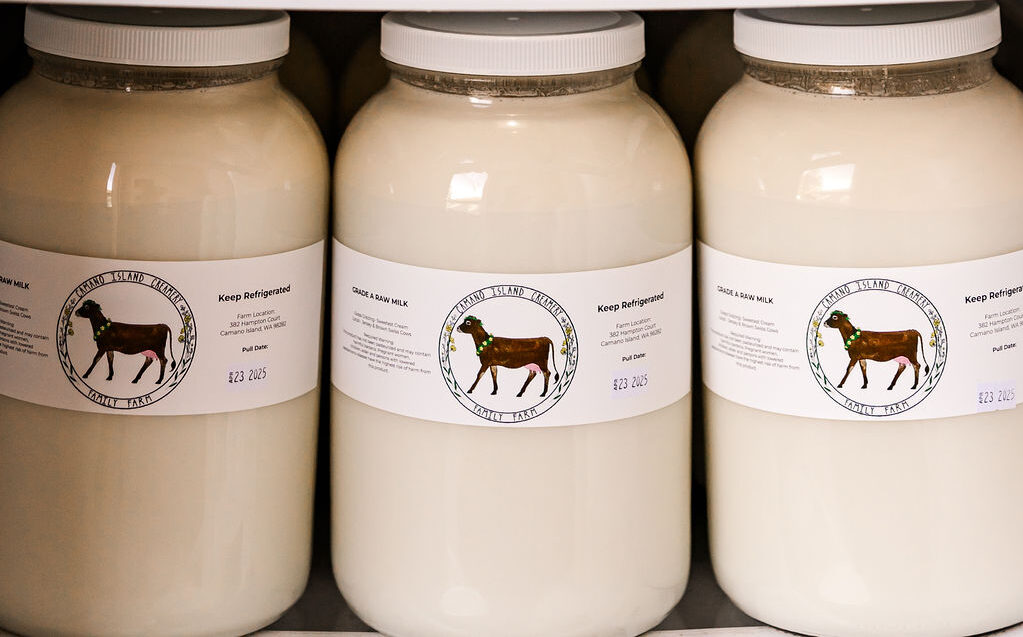
There are other things that rise this way, as well. Raw milk still has the stuff that conventional milk only dreams of: cream on top! In July, we started partnering with Justin and Katrina Seckel at Camano Creamy to deliver super fresh, local, raw milk. They got into dairy farming because of a similarly long and storied family lineage of dairy farmers paving the way for the next generations. I love seeing all the milk jars come and go with the thick layer of cream, naturally rising to the top. You can make your own butter or ranch dressing or clotted cream with raw milk, because the richest, creamiest part of milk always rises to the top. 

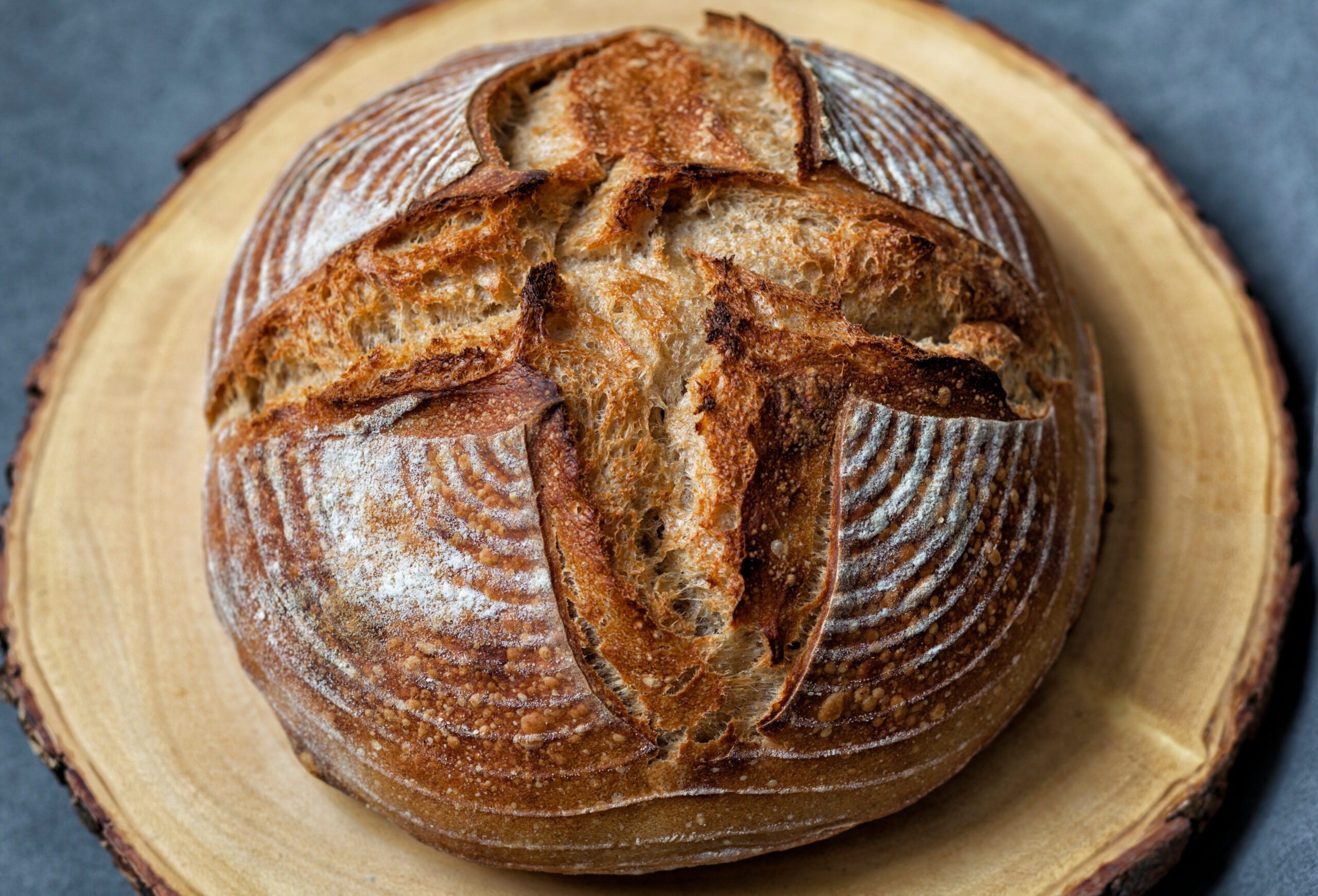
Rising is also the main feature of a yummy loaf of bread. Watching dough rise and rise, over and over, as you knead it into shape. As we prepare to start offering fresh local breads (teaser!), I’m again reminded that natural things rise, organically, without anyone telling it what to do. The best rises to the top. 

Of course, that makes one ponder the reverse: which things in life don’t obey this natural law? Do all the inorganic structures and complex systems and institutions that we humans create follow suit? Does the “cream of the crop” also naturally rise to the top of the systems we’re in control of? Or do we surpress the cream from rising to the top of our own systems in order to squeeze out more and more of a quicker, cheaper solution? Perhaps we’d get better results in our diets, districts, or diplomats if we choose to play in arenas that allow nature to take it’s course more often, where there’s space to grow slowly in their own way, rather than dictate an unnaturally quick pace for a subpar harvest. 

When my grandparents moved to little ole Camano in ’77, they barely knew a soul here. But they found a modest home to move into and good community. My wife and I get to enjoy that home 50 years later. A home that was built by a close family relative of Justin and Katrina Seckel. Good things take time. 

Posted on

Grapefruit and Citrus

This newsletter is going way back to 1979 to a time when I was kid. My children have had a distinct advantage over me when I was growing up. I was a Hamburger Helper and Fruit Loops kid and wouldn’t have known a Fuji from a Granny Smith apple or a Navel from a Valencia Orange. My only experience with fresh produce are fond memories of shelling peas on grandma’s back porch and carrying the 4th of July “seeded” Watermelon to the family picnic. 
Fast forward to 1994, happily married with 3 of our own kiddos. This is when I began a career in retail produce. It wouldn’t be for another 4 years until Joelle and I would launch the Organic Produce Shoppe and then a few more years before we added farming and home delivery.

Those early years are where I gained a lot of experience about the seasonality and quality of produce. I have trimmed tens of thousand lettuce and spinach bunches, handled even more apples and citrus. At my core, I am a good food advocate and love working with quality growers and fresh produce.

I remember it as if it was yesterday, I was interviewing for a manager position after a few years of working in the industry. It was a walk and talk interview. It is not uncommon for me to ask questions when one enters my mind. I am just curious and like to learn. As we were walking through the fruit displays, I asked, “Where did you get grapefruit this time of year?” The manager hiring me said, “California???” This is not the question a potential manager candidate should have asked (smile). 

To be completely honest my only experience was in boutique high quality produce markets. The owner of the company where I started my career never carried grapefruit from California. He was partial to Texas and Florida, which are harvested at a different time. And for sure, those are two really good grapefruit growing regions, but California also grows some outstanding citrus. 

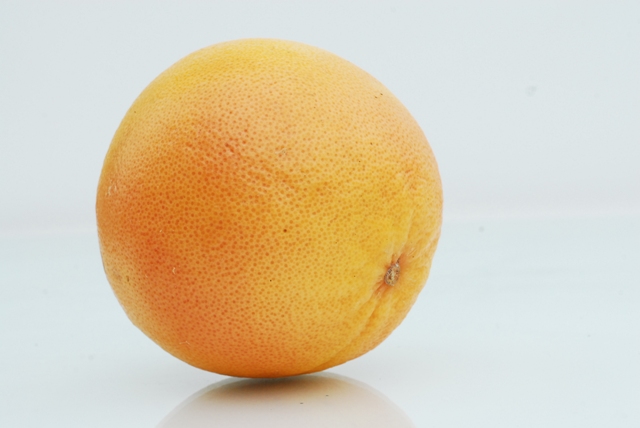
This week we are featuring some of that beautiful grapefruit from California. When I eat grapefruit, I am less likely to use a grapefruit spoon, but opt for cutting it into wedges and eating them like that. 

I did still get that job, because the manager was looking for a person with an eye for quality. Quality is still a driving factor for our small business and customer satisfaction. 
– Thank you for allowing our family to serve yours,

Tristan, Joelle, Alaina and the Box of Good crew

Posted on

Earlier this Week

Last weekend, I was up early; earlier than normal. And instead of tossing and wishing I could go back to sleep I got up. I had even turned off my alarm the night before, hoping that I could sleep past 5am. 4:30 came and I was awake, but so was the morning sky. It was definitely worth the earlier start to my day, but truth be told, I will try and get in a siesta later. 

This morning I took advantage of the earlier start and started making sourdough bread, which in reality started a few days ago, when I “woke up” my starter and started prepping it for Sunday baking. That was a whole lot using the word starter, but you have to start somewhere. 😊 Baking is relaxing for me, I am not a pastry type of baker and I am certainly not a detail person, but I do like to follow a recipe at least once. 

I measure my ingredients using a scale. The baker’s formula is so simple 100% four, and then 80% water, 20% starter and 2% salt. So, in a real-world application it looks like this; 1200 grams of flour, 960 grams of water, 240 grams of starter and 24 grams of salt. As is my practice, I add the water, then the starter so it equals 1200 grams. Then I reset the scale to 0 and add the 1200 grams of flour, but this morning I turned off the scale by mistake and started adding flour. The reset and off buttons are right next to each other. I realized that it was turned off fairly quickly, but now I had no way of knowing how much flour I added. EEK! But in reality, close enough will work, so I added more flour and added more flour and then I thought, “this looks close enough.” Life can be similar to a recipe, and processes and habits are important, but when things shift or go awry, it will mostly work out. We will have fresh baked bread and the the kiddos and grand kiddos will make quick work of it.  

Healthy eating is similar to my bread baking experience, we need nutrition, and getting a Box of Good delivered is a great strategy to eating healthier. And because life is always happening, your delivery makes it easier to automate your health because good food is scheduled to arrive at your door. And much like the Baker’s formula helps a baker produce consistent loaves, your Box of Good helps you eat healthier. And for me staying as healthy and strong, as long as I can, is my goal, and it all starts with good food.  

This week we have fun, local purple carrots! I am attaching an article on Purple Carrots I found at https://www.organicfacts.net/purple-carrot.html  

Purple Carrot Nutrition 

Purple carrots have a similar nutrient profile to other types of carrots, with a few important distinctions. These carrots are a rich source of dietary fibervitamin Cpotassiummanganese, and vitamin K. There is a low level of calories – only 25 calories per cup – and only 5 grams of carbohydrates. When it comes to antioxidants, however, purple carrots have a good lutein and beta-carotene content. Purple carrots also contain more phenolic compounds, such as anthocyanins, than any other carrot variety, except for black carrots[2] 

Purple Carrot Health Benefits 

The most impressive health benefits of purple carrots include its effects on weight loss, chronic disease, cardiovascular disease, inflammatory conditions, vision, and circulation, among others. 

Weight Loss 

Purple carrots are particularly prized for their place in a weight-loss diet. This low-calorie, low-fat, and high-fiber vegetable is an excellent way to fill yourself up without compromising your dietary goals. Furthermore, digesting all of that fiber can help to speed up your metabolism, which can help with passive fat-burning if you’re trying to shed pounds. 

Cardiovascular Disease 

With high levels of dietary fiber and antioxidants that can help protect the integrity of the cardiovascular system, purple carrots are great for heart health. The fiber can help to lower overall cholesterol levels, which will lower your risk of atherosclerosis, heart attacks, and strokes, as well as cardiovascular diseases. The vitamin C in these carrots is also critical for the strength of the artery and blood vessel walls. [3] 

Reduces Inflammation 

Research has shown that anthocyanins, which are found in high concentrations in purple carrots, can help relieve many different inflammatory conditions, including arthritis, gout, headaches, and even hemorrhoids. [4] 

Improves Vision 

Although purple carrots contain less beta-carotene than orange and yellow varieties, there is also a significant amount of lutein and zeaxanthin in these carrots, all of which can help to improve vision. These antioxidants will reduce oxidative stress in the retina, preventing macular degeneration and lowering your risk of cataracts[5] 

Improves Circulation 

There is a decent amount of iron in purple carrots, which is great for boosting circulation, but the presence of vitamin C and other antioxidants will also help to prevent breakage and blockage within the circulatory system, ensuring that all your metabolic processes continue normally. [6] 

Treats Chronic Disease 

The high level of anthocyanins found in these colored carrots means that they are excellent antioxidants; these compounds are able to seek out and neutralize free radicals, which are responsible for cellular mutation and other forms of chronic disease, such as heart diseases, and rheumatoid arthritis. [7] 

How to add Purple Carrots to your diet? 

Adding purple carrots to your diet is very easy and healthy as well. Here are some simple ways to add them to your diet. 

  • Purple carrot salads: You can dice some purple carrots and add to any salad of your choice 
  • Roasted purple carrots: Slice the carrots and roast them with some olive oilsalt, and pepper 
  • Stir-fries: You can add purple carrots to while making any stir fry along with your favorite vegetables or meats 
  • Carrots and hummus: You can serve sliced purple carrots alongside hummus 
  • Soups and stews: Purple carrots can be added while preparing any soup or stew 

There are many ways to enjoy purple carrots, so start cooking and enjoy! 

Posted on

Hot, Cold & Cabbage 

This weather has felt more like spring than a start to our summer. One thing for sure is our farm team has a lot of weeding to do. 

The boxes are trending towards more and more local and definitely a lot of summer fruit are showing up from the farmers in California. We have been buying from some of these farmers for over 2 decades. They are great at what they do and have the climate and soil types to grow these crops. We are so blessed in America that we have such a diverse farming community and equally diverse regions to draw fruits and vegetables from as well. 

As the climate changes, having many geographic regions will help America to be able to feed itself as well as other countries. Our geographic diversity is so important to not only navigate the effects of climate change, but for our health because we should continue to have access to fresh fruits and vegetables year around.  

If the American population could make one change to their diets it would be to add a few more servings of fruits and vegetables.   

In an article I read recently it says:

Rockville, Maryland (June 7, 2021) — Only 5% of men and 9% of women are getting the recommended daily amount of dietary fiber, according to a study being presented at NUTRITION 2021 LIVE ONLINE. Insufficient fiber intake is associated with a higher risk of heart disease and diabetes, two of the most common diseases in the U.S. 

“These findings should remind people to choose fiber-rich foods like whole grains, fruits and vegetables to reduce their risk for heart disease,” said Derek Miketinas, PhD, RD, an assistant professor at Texas Woman’s University, the study’s lead author. “Based on our findings, fewer than 1 in 10 U.S. adults meet their daily recommendations for fiber intake. For those with diabetes, it is especially important to eat enough fiber since they are at a greater risk for heart disease.” 

The daily fiber goal for females is 21 to 25 grams per day and for males is between 30-35 grams. Your Box of Good is filled with fruits and vegetables that will help you reach the recommended daily fiber goals. As an example, the local green cabbage from Ralph’s Greenhouse this week is packed with fiber. Here is the nutritional profile for 1 cup of raw cabbage. 

  • Calories: 22. 
  • Protein: 1 gram. 
  • Fiber: 2 grams. 
  • Vitamin K: 85% of the RDI. 
  • Vitamin C: 54% of the RDI. 
  • Folate: 10% of the RDI. 
  • Manganese: 7% of the RDI. 
  • Vitamin B6: 6% of the RDI. 

Tristan