Posted on

Inchelium Red Garlic

We’re sharing our Inchelium Red Garlic harvest with you again next week! These gigantic bulbs not only taste above and beyond “regular” garlic, they have the heritage to back them up! It is considered to be the oldest strain of garlic in North America!

Here’s a little more about this heirloom garlic.

Inchelium Red Garlic Allium sativum var. sativum

One of the most productive of all the heirloom garlics, this softneck variety is also an artichoke type. This means that its bulbs cluster in layers like artichoke petals. The variety was discovered on the variety was discovered on the Coleville Indian Reservation at Inchelium, Washington. It has consistently won high marks (often taking first place) in garlic tastings. From a culinary standpoint, it is probably one of the best of the American heirloom red garlics.

Its historical relevance is profound, it has been identified as the oldest strain of garlic grown in North America, having been grown far before the arrival of English settlers. It was found originally on the Colville Indian Reservation in Inchelium, Washington. Today Inchelium garlic can be found sold under its true name (not simply, garlic) throughout the Pacific West and Northwest United States.

Visit our friends Filaree Farm for more info.


Posted on

Join Me in Protecting the Integrity of Our Food Supply

Locally, we have been fighting to preserve farmland and now I need your help to convince our two Congress Representatives to vote NO on HR1599: the Safe and Accurate Food Labeling Act. This bill essentially prevents states from adopting their own GMO laws and REVERSES any laws that have already passed. That is the wrong kind of leadership on this issue.

The anti-GMO community is calling this the DARK Act (Denying Americans the Right to Know Act).  I have spoken with Congressman Rick Larsen and Congresswoman Suzan Delbene’s office and neither of them are committing at this time on which way they are going to vote. The vote is in two days – I know how I would vote!

Please click on the link and express your opinion. The vote is scheduled for Wednesday or Thursday. Also, please share this and let’s let our representatives know that GMO’s are not the future and should not receive preferential treatment from the federal government. ASK them to vote NO on HB 1599, aka the DARK Act.


Tristan


Act Now on GMO Labeling to Stop the “DARK” Act

Contact your Representative in Congress today!

From the National Organic Coalition 

The innocuously named HR 1599: the Safe and Accurate Food Labeling Act has been dubbed the DARK Act (Denying Americans the Right-to-Know Act) by members of the good food movement. The DARK Act will be voted on in Congress next week.

The DARK Act will:

  • Prevent states from adopting their own GMO labeling laws and reverse laws that have already passed.
  • Prevent state or county laws regulating GMO crops.
  • Prevent the Food and Drug Administration from requiring companies to label GMO ingredients and instead continue a “voluntary” labeling policy. In 14 years, not one company has voluntary labeled products containing GMO ingredients.

Take action now to stop the DARK Act!

  1. Call the Capitol Hill Switchboard at 202-224-3121, and ask for your Representative’s office where you can leave her or him a message.
    Click here to find out who your Representative is.
  2. Click here to send an email: Tell Congress to oppose the DARK Act and support mandatory GE food labeling!

Below is some sample language for your message to your Representative.
Please customize this to fit your voice.

Please oppose HR 1599 (the “Safe and Accurate Food Labeling Act”). Congress should focus on the labeling solutions that Americans are asking for – not legislation written by and for big food and chemical companies that only serves to keep Americans in the dark.

You may also thank legislators who have come out against the Dark Act and for labeling:

Chris Gibson of New York
Peter DeFazio of Oregon
Barbara Boxer of California

For more information, and to send a message today, click here.

GMO food labeling is important to Americans, with over 90% consistently supporting transparency in the marketplace. In 2013 and 2014 there were over 70 GMO labeling bills introduced across 30 states, with laws being passed in Maine, Connecticut and Vermont.

View this post on Cornucopia.org

Posted on

Stonefruit 101

Stonefruit 101

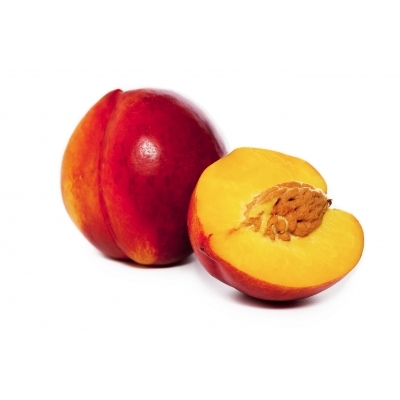
“Stonefruit” refers to members of the genus Prunus, which includes peaches, nectarines, plums, pluots, cherries, and apricots. The season for summer stonefruit is short-lived, and delicious! With the fruit coming and going so quickly, we don’t want you to miss out by having to toss spoiled or improperly ripened fruit. Here’s some info on proper storage in order for you to make the most of these short-season gems.

Care – Store unwashed fruit at room temperature until ripe (usually only 1-2 days), then place in sealed container in the fridge.

Ripeness – Gently press around stem and when flesh gives slightly to pressure fruit is ripe. Stonefruit ripens from the inside to the outside, so if fruit is soft all over it is more likely overripe.

Tips for Preventing Spoilage – Stonefruit’s biggest enemy while ripening is moisture coupled with lack of airflow. Set ripening stonefruit on a cloth or paper-covered countertop or in a place where it gets plenty of airflow. Try setting them stem side down to ripen. This lessens the chance of then rolling and bruising. Once your stonefruit is ripe, it deteriorates very quickly. Within a day of being fully ripe, if left out of refrigeration, you can have overripe/spoiled fruit and some very attracted fruit flies. Check daily and place in refrigerator as soon as you notice the stem area has begun to soften. Take special care when handling your stonefruit – never squeeze to check for ripeness! Even a small bruise will be cause enough to turn into a rot/bruised spot on your fruit as it is still ripening.

Use – Once fruit is ripe, and you’ve placed in the refrigerator, plan to use within a day or two (this gives you a total keeping time of about 4-5 days). Stonefruit is refreshing as a healthy breakfast paired with yogurt or hot/cold cereal, as a topping to a green salad, and as an ingredient in fruit salads. For grilling, or for topping green salads: use slightly less ripe fruit, it will hold up better without breaking apart/juicing. All Stonefruit bakes up fabulously into crisps, pies, and sauces!

Posted on

Keep Multi-Family Zones at Higher Densities and Preserve Farmland

A few weeks ago you received an action alert from farmer Tristan Klesick and I, asking for your help in telling the Snohomish County Council to not adopt changes to the County’s Transfer of Development Rights (TDR) program. Unfortunately, the County Council did not listen.  Instead, Council’s decision was a missed opportunity and allowed exemptions for single family homes and townhouses from the TDR program, and preserving valuable farmland and local food sources.  

If that wasn’t bad enough, now the County Council is considering removing even more land and development from the TDR Program!

The County Council is considering reducing minimum density requirements in multi-family zones–even those multi-family zones around Highway 99 are perfect for transit-oriented, mixed use redevelopment.  This would allow for single family homes and townhomes in areas that are best suited for higher densities.  It would also remove more land from the TDR program, which would reduce opportunities for protecting critical farmlands in Snohomish County.

If the Council approves, we will lose opportunities for affordable housing near transit; we will lose receiving areas for TDR development credits to preserve farmland, and we’ll have further expansion of our urban growth areas into our rural lands.

That is a lose-lose-lose situation.  Ultimately, if the Council decreases densities in our Multi-Family zones, we will also be adding more and more cars to our roads creating more traffic nightmares, adding more pollutants into our air and water, and giving the developers exactly what they want…open season on our rural lands for more sprawling development!  And we won’t be helping our farmers preserve farmland!

Please CLICK HERE to send a message to the Snohomish County Council today to tell them NO to reducing minimum densities in our Multi-Family zones, and YES to keeping TDR receiving areas intact for these zones to help preserve farmland and local food sources.  

Our Council needs to hear from you!  They need to know that you want housing choices for all income groups and higher densities in the multi-family zones that will help jumpstart transit-oriented development.   We need long-range planning regulations that will house our growing population near transit and urban centers, reduce car trips that are polluting our air and water and clogging our roads, and save farmland from urban sprawl.

The hearing is at 10:30 a.m. on Wednesday, July 15th!  Please CLICK HERE  to send the message before the hearing.  If you can, please attend the hearing and speak directly to the Council.

Thank you for your help!

Kristin Kelly, Snohomish/Skagit Program Director, Futurewise

P.S.  If you would like more information about how to support your local farmers and about Klesick Farms, contact Tristan by Clicking Here.

Join, Renew, Give | Facebook | Twitter @FuturewiseWA

Manage Your Profile Information | Unsubscribe by clicking here
Kristin Kelly
Email: [email protected]
Phone:
Address: 1429 Avenue D, #532
City: Snohomish WA 98290

Posted on

Our New-and-Improved Shopping Site!

As of today, the online shopping experience at Klesick Farms just got a whole lot better! Try it out here! The first thing you will notice is that all of our pages now look like they belong to the same good food site, but there also have been a couple of other useful changes. Here’s a quick overview of what our site update means for you.

  1. Mobile-Friendly

Ordering your box of good or adding on that bag of apples while you’re on your phone just got easier. Shopping for your produce now works equally well on your smartphone, tablet or desktop.

  1. Simplified Checkout

With everything on one page while checking out your order, you can easily see all that is required to submit your order.

  1. Improved Order Management

On the view/edit orders page, all of your items on order are grouped by delivery date so you can easily see what is coming each week and change your delivery date if needed.

If you experience any problems with our site, please let us know!

Posted on

Preseving Local Food Options & Farmland, Part II

Week of June 21, 2015

Preserving local food options and farmland should not be this hard! The United States has been blessed with some amazing Natural resources like good Farmland, Forest lands, grazing lands, minerals, water and waterways. And since the day this country was founded we pushed west.  Forward Ho! Surprisingly?!?!?!, we reached the Pacific Ocean and no longer can push west.  So what are we going to do now to wisely use the finite natural resources we have been blessed with to provide a quality of life for generations of future citizens?

Farmers are like any other member of our communities. We have kids, grand kids, we have to go to the dentist and doctor, save for weddings and retirement. We also have to manage a large community resource called farmland. And in the last 20 years that management has included an ever increasing regulatory burden, otherwise known as additional expenses to run our farms. And the closer your farm is to the city it gets more complicated, and if you happen to farm next to a river and a city, WOW!

Given the County Council’s appetite to not use Zoning or TDR as mechanisms to shift the Development pressure away from our farms at the moment, we need a different strategy.

I think fair pricing, not price gouging is a part of the solution, but supply and demand drive prices. Having more farms selling to more local folks will keep food prices affordable and have the biggest impact on saving farmland today.

To accomplish this, each of us will have to be intentional. I believe small-to-medium farmers are the key to feeding our local communities. Literally, bringing a box of good to more people is the solution. I have intentionally positioned Klesick farms to play a larger part in feeding our local communities. We have moved to a new packing facility, we have expanded our delivery days and are working with more local growers to get more local food to our customers.

The solution is to have more of you! Yes more of you: customers who are intentional about supporting local farms. It is that simple: the more local customers, the more local farms. So preserving local food options looks like eating locally from local farms! We need more intentional eaters!

Look for information on Facebook and in your inboxes this week as we roll out a new summer campaign to preserve local food options and farmland.


Together we can make a difference!


Farmer Tristan


Posted on

Preserving Local Food Options & Farmland, Part I

Week of June 14, 2015

Last week, Klesick Farms and you, our Good Food Community, teamed up with Kristin Kelly, the executive Director of Snohomish County Futurewise, and the Pilchuck Audabon Society to encourage our County Council to “preserve local food options and farmland.” In 2012 the County Council voted 5-0 to implement the current Transfer of Rights Development (TDR) program. Last week the Council voted 4-1 to essentially gut the TDR program and give the development community the “green light” to build more single family homes. So now the County Council has “caved” in to the developers’ wishes, meaning our urban areas will still receive most of the incoming population growth.

If the Council would have stood on their decision to support TDR, that growth would have still gone to our urban areas, but we would have been able to preserve, forever, thousands of acres of farmland at the same time. The Council, except Dave Somers, didn’t want to hold the line and require the development community to use TDRs. Council members Ken Klein, Terry Ryan, Brian Sullivan, and Stephanie Wright voted against TDR. So now Snohomish County residents will still get the extra growth, but the developers will get more profits and no farmland is protected. That is not a win-win; it is a windfall profit for a few landowners and developers.

Also, in 2012, Council members Brian Sullivan and Stephanie Wright voted for the TDR program. If they would have voted the same way this time or committed to stand with TDR, I wouldn’t have had to ask for your help. Ironically, Council members Brian Sullivan and Stephanie Wright were not running for reelection in 2012, but they are this year.

What really bothers me is the lack of integrity that exists in our political process. This change to the TDR program “came out of nowhere” and was timed to limit public participation and placed into legislation where there is no repeal process. Where is the transparency in that!

This week Kristin and I will be asking for your help again to send one final email message to the County Council expressing our dissatisfaction with their vote and a desire for more transparency in the process. Please join us in sending a strong response for the Council to preserve our local food options and farmland by implementing wise growth policies going forward.

Kristin Kelly and I both believe that the Snohomish County can balance the need to accommodate the future growth with protecting our farmlands. It is more than doable. Click here to send your response to the Snohomish County Council.

Respectfully submitted,

Farmer Tristan


Posted on

Tristan's Letter to the County Council

Tristan is headed off this morning to talk to the Snohomish County Council.
Here’s the letter he’s bringing with him.

A huge “Thank you” to each of you who have responded so far. And for those of you who haven’t, there’s still time. Don’t wait, today, June 10th, 2015 is the close for the discussion. Add your voice to protect Snohomish County Farmland!


Good Morning, My name is Tristan Klesick and I am a local farmer from Stanwood. Before I begin, I wanted to say “thank you for choosing to be leaders”. Leadership is a rare commodity today and those who are willing to make the final decision are also rare.

I have been in the food and farming business for over 20 years and the last 15 years I have been involved with the TDR issue. The County has sent me to Maryland and California with then Councilman John Koster and Senior Planner Tom Niemann to study what worked and didn’t work in the TDR world. I was also co-chair of the Snohomish Agricultural Economic Development Action Team or SAEDAT.  The Current TDR program is a solid policy.

Local farmland is an economic driver that provides local, regional and national food, helps keep taxes lower, provides habitat and flood storage.

I appreciate the tension surrounding Amendment 13. This issue is important enough to me that I engaged my community of customers and asked them to help me preserve local food options and farmland. I sent an email to 8000 people on my list and posted it on my FB page. As of this morning, that FB post has been seen by over 20K people and shared over 225 times.

My customers understand that growth is going to happen, infrastructure needs to built, but preserving the ability to feed our citizens is equally important.

The current TDR program is a good start at managing that growth and also ensuring that local citizens will have local food.  Snohomish County needs the Development community to build the infrastructure to handle the growth and the TDR program, as it is, should also streamline that process for them. I understand that it is a new paradigm, but planning now to feed the current and future residents of our county is a part of that new paradigm.

This year I have seen the need for my farmland to produce more fruit and vegetables, because the local demand is increasing, but also because the “traditional” vegetable producing regions like Arizona and California are in major droughts. If things don’t return to somewhat normal precipitation, Snohomish County Farmland will be even more important to our county and this region.

My constituents, who are also your constituents, will want to hear how Council members Somers, Klein, Wright, Sullivan and Ryan voted. I will report back to them. I would love to report back to them that each of you led on the issue of managing growth and preserving local food options and farmland by voting no on amendment 13!

Thank you


tristan-sign

Posted on

Summer is Busy

Even if you are not a farmer, summer has got to be one of the busiest times of the year! From September to June the routine is fairly stable, but when school gets out – ALL BETS ARE OFF. Moms everywhere go from chauffeurs to program directors. Maybe the year ‘round school concept would make more sense in our post agrarian society?

Why do we send our children to school from September to June? Primarily because summer break was once needed to grow food, put up food, mend fences and cut firewood. A productive summer meant a comfortable winter! With the shift to a non-agrarian based calendar, maybe school should shift as well – just a thought. As a local farmer, a year round schedule would open more markets and more locally grown food could find its way into the school system. And that would definitely be a good thing for our children, local farmers and the health of our nation. Since that isn’t happening anytime soon, Klesick Farms and their band of local growers can save you some time by letting you skip at least one trip a week to the grocery store. This time of year, when the kids are running the asylum, time is definitely high on my families list.

Next on my list is eating well. I know you would think that eating well is more important, but truth be told, most moms (& dads) wouldn’t mind a little “me” time (just a little). Your box of good is almost as fresh as a garden (even I can’t beat a garden for freshness), and even if you have a garden, it probably wouldn’t hurt to supplement with peaches, melons, beans, cherries or other family favorites you aren’t growing.

For those of you who have chosen to skip the garden, Summer arrives every delivery day with your box of good. We make eating healthy – simple, fun and affordable. We do it all year long, and especially during the summer when we are showcasing the bounty of our local growers. A box of good is also convenient! If you love watermelon or grapes or basil, you can add that to your delivery every week and it will arrive at your door. Imagine, the next time you “go shopping” you simply pull out your phone, order what you like at klesickfarms.com and then we hand pick it, hand pack it and hand deliver it to your door.

I have been working with the same growers for almost 20 years, we know what we are doing and we like to do it. We like farming and helping you feed your family well is about as satisfying as seeing plump, juicy sugar snap peas or ripe red raspberries ready to harvest.

Enjoy your box of good, we enjoy getting it to you!


tristan-sign

Posted on

People Matter II

A few weeks ago, our family took a vacation/work trip to San Diego. I attended the Dave Ramsey business conference called The Summit while Joelle and kiddos hit the beach. For me, it was three powerful days of intense business encouragement. Of course, Dave and his team taught several sessions, but I also got to learn from John Maxwell, Dr. Henry Cloud, Patrick Lencioni and Rabbi Daniel Lapin. Oh my word!

If I could be so bold as to sum up three full days of sessions, I would have to say the theme was “Build Culture.” What a commission! I am pretty sure that every business owner there left with the encouragement to build their team’s culture. Why focus on culture? Because as a small business it is your competitive advantage and it is the right thing to do.  Most businesses focus on measurables like productivity, mistakes, sales per hour, etc. These are necessary, but they absorb a far greater percentage of the company’s focus. And quite frankly, it is easier to focus on something you can measure.

The benefits to building culture make the measureables more easily attainable. Why? Because it is your culture that accomplishes the goals of your company, when your team is treated with respect and valued, it spills over into how your customers are treated.

The other day I was talking with a friend, a local business that we both frequent came up and the conversation turned “south” quickly.  He had received poor and indifferent customer service, not once, but twice and now he won’t shop there and went as far as to say, “I don’t think the owner (he used his name) cares anymore.” I tried to defend the owner, but the lack of care extended not once, but twice, has turned my usually mild mannered, care free friend into a negative advertisement. Heart break .

From my friend’s perspective, the culture of that business has shifted. Building culture and maintaining culture is vital to the success of any business – it spills over into every area.

At Klesick Farms, our team is important and you are important. Our team can always accomplish more working together, so whether we are packing your boxes of good or delivering them, we are focused on making your experience with us friendly, efficient and enjoyable. We know you are busy and our goal is to help you and your family eat well and live well.

One of the best ways that I can serve your family well is to continue to build our team culture; to do that I have to get better as a leader (which is why I made the investment to go to this conference). I have to lead by example, continue learning, and also train and inspire my team to serve you well.

Thankfully for me, my team already wants to serve your family well!


tristan-sign

Posted on

People Matter

IMG_0040

Last week we sent an email to each of you asking for you to partner with us in our Neighbor Helping Neighbor program. Thanksgiving and Christmas are the big traditional pushes to rally around homelessness and hunger, but just because the calendar has changed doesn’t mean the need has changed. The volunteers who serve at the food banks are a part of the equation to solve this issue, but so are you. Your generosity in caring for local neighbors is also a part of equation. When we as people care for the physical needs of other people, what we are saying is that we want our neighbors to be whole.

IMG_0037

It is so humbling to get to serve the Klesick Farms community because “you get it”. You get that blessing others, caring for others is the right thing to do, and in the process, you too are blessed. Last week we sent 46 high-quality nutrient-rich boxes of good to eight different food banks. Your tangible generosity provided hope and nutrition to those less fortunate and inspiration to those who are on the front lines extending that hope and nutrition. Thank you.


Two weeks ago we were working double time on the farm to get potatoes, sweet corn, winter squash, and Maleah’s flower garden planted so that we could head off to San Diego for a Dave Ramsey EntreSummit business conference the following week. While in San Diego, I mostly sat in the conference and the kiddos enjoyed the sights and sounds of Southern California.

This conference was incredible: three days of practical business teaching perfused with a customer focus. Being in business is about serving people, about meeting a real need in your life, about partnering together to do something bigger than ourselves, and about building community. You and Klesick’s are doing this together through your support of our box of good.

IMG_0022

I used to farm with the Gentle Giants: Belgian draft horses, which are big, beautiful, and powerful animals. One Belgian horse can move 12,000 pounds – more than 5 times its weight – and two Belgians that are just randomly put in harness together are able to move up to 30,000 pounds. However, by working together they can pull and additional 6,000 pounds! That synergy is impressive. What is even more impressive is when you take a matched pair of Belgians that know each other, have worked together, and trust each other; this team, when it “leans” into the harness can move not 24,000, not 30,000, not 36,000, but they can move 48,000 pounds!

Together, you and Klesick Farms are like a matched pair of Belgian draft horses. Our synergy, created by a desire to feed our families good food and extend tangible compassion to others is as equally impressive. By working together, we are making a bigger impact in our local communities, in the lives of our less fortunate neighbors and the lives of the local organic farmers.

Together, we are creating something special!


tristan-sign

Posted on

Apple Blossoms

I love seeing blossoms on my fruit trees. It means that I have a chance to harvest fruit this fall. It means that there will be food for a whole bunch of pollinators like Honey bees, Mason bees, Bumble bees. Now, I just need them to show up! Of course if they do show up in droves, I will be thinning fruit like crazy because there are a bazillion flowers this year, and if all of them set fruit –WOW!

Ideally, from a farmer’s perspective, about 50% pollination would be great. It would take less time to hand thin and the fruit would be able to “size” up quicker! Hand thinning takes a ton of time and is very monotonous; however, thinning translates to larger fruit because there is less competition for the nutrients!

This year our neighbor is no longer raising Honeybees and so I am trying Mason bees. Mason bees (from all the information I have been reading) are excellent pollinators. The challenge with this spring is that it has been really erratic and the blossoms on the trees are out in front of the pollinators. It will be interesting to see how much fruit actually sets, based on the earlier bloom time this season.

In our pear block, the Kosui Asian pears were way out in front of the Conference pears. Normally, they are supposed to cross pollinate each other. It looks like the Bosc Pears will be blooming with the Conference pears though – something else that normally doesn’t happen. These last two might cross pollinate each other which rarely happens.  Farming!?!?!?!

It is the most beautiful and disheartening thing to see all the blossoms but not have pollinators out in force. As a farmer, I really have very little control of the environment. I can prune on time, I can fertilize, I can even plan for my neighbors exit from beekeeping, but in the larger picture, I humbly submit to you that my part is very small. I tend to roll with what nature brings me, I do plan and I will mitigate, but for the most part I am working with nature and its natural laws.

Really, no matter what I do and probably what you do, we shouldn’t put too much emphasis on our part, but do the best we can with what we got and leave the rest to the Lord.

May there be fruit to harvest this fall!


tristan-sign

Posted on

Healthy Choices

Klesick Farms customer, Nancy, sent us a fun project that her 1st. grade daughter, Anna did on healthy food options. We love hearing how our Klesick boxes of good impact and inspire the families we serve for good, and wanted to share this with you!

Nancy writes:

“Every March our homeschool co-op on Camano Island has a “SHOWCASE NIGHT” where kids can show off talents on stage, projects they’ve completed or share knowledge they’ve acquired.

This year my 1st grader, Anna, did a project on “Healthy Choices”. We talked about foods as we shopped, we watched documentaries, she helped make some healthy meals, we learned some cooking basics, learned about what sugar does to your body and how it makes you feel, etc. We recorded all of this by taking photos and putting them on a display board. We also wanted to talk about the cost of healthy choices versus ‘junk food and fast food choices’ because some people argue it’s too expensive to eat healthy.

We gathered a number of unhealthy choices as well as ‘a box of good’ from Klesick Family Farm to show people two options. The junk food actually ended up costing more and we had to drive somewhere to get all of it. Anna had fun having people guess which was more expensive, the box of good, or the box of junk food. For those who guessed correctly, she gave them a fruit kabob which she enjoyed making – a yummy healthy choice, rather than a candy prize.

Each week, Klesick’s ‘box of good’ just shows up on our door step! It’s a healthy choice, because you can choose it when you aren’t rushed. When our life is harried and crazy running to sports, ballet, and various classes, we often make bad food choices. But, this beautiful ‘box of good choices’ arrives and helps you make a healthy choice without really even thinking. We included some of the other healthy choices that we love on her picture board display, like hiking, walking, spending time with people you love, serving others, etc. We’re glad that Klesick Farms is part of the healthy choices in our lives! My 8 year old son actually prefers vegetables to some sweets and I think the weekly routine of being delivered a ‘present’ of produce on our doorstep has really influenced this! It’s always so EXCITING to see what’s inside :)”

Hansen project2  Hansen project

Posted on

Democracy in the Grocery Isle?

One of the more interesting takeaways from the state-based battle to enact GMO food ingredient labeling has been the deluge of money that Monsanto, their biotech allies, and Big Food corporate interests have been willing to spend to drown out your right-to-know about what you are putting in your mouth. Cornucopia’s research reveals that these supporters of ignorance have collectively showered more than $100 million on the four state referendums to date, in California, Washington, Colorado and Oregon.

Ever since the U.S. Supreme Court ruled on Citizens United, whatever constraints existed on corporate spending in elections have evaporated. Although state referendums are a different electoral animal, the willingness of corporate power to spend all that they need to prevail has been fully demonstrated. They have juiced the system and tilted electoral power in their direction.

While Monsanto and their allies have thus far proven successful—albeit narrowly in three of the four states—the handwriting may be on the wall. Good food activists are growing increasingly aware that they hold power in the marketplace that even the corporate behemoths must respect.

It is somewhat ironic that democracy may break out in the marketplace while it is being squelched at the ballot box. Clearly, the biotech forces and Big Food need us to buy their products in our consumer society. Yet in spite of their sophisticated, expensive advertising and packaging, increasing numbers of conscious consumers are doing their own food and product research (fueled by help from organizations like Cornucopia).

Using their heightened awareness and their focused purchasing power, these savvy eaters are forcing companies like Kashi (owned by Kellogg), WhiteWave, Organic Valley, Kraft, and Stonyfield to make healthier changes to products. Why? For the most part, these companies are terrified of how their investors and/or Wall Street will react and punish them for unresponsive arrogance and diminished sales.

Amplify your power as a conscious eater. Investigate our various food and commodity product scorecards (visit www.cornucopia.org), and then share this information and the related web links with your social network. This research is regularly updated so that you and your friends can make the best “vote” in the marketplace.

This story originally appeared in the spring issue of The Cultivator, The Cornucopia Institute’s quarterly print publication. Used by permission.

Posted on

Hold Your Horses!

That saying is so universal and it stems from another era, but the message still resonates and is applicable today.  When I farmed with Belgian draft horses, “hold your horses” took on a deeper meaning. Those “girls” of mine were big 1,700 lbs. of muscle and single-mindedness; gentle giants, for the most part.

However, getting them to stand still and wait could be a challenge. Shoot, getting me to stand still and wait is a challenge, and I don’t even have a bit in my mouth! Conversely, waiting and learning to wait is a necessary life skill for all of us.

This spring has been tough to wait! We have had incredible weather, warmer than expected and dryer than expected. I have had several non-farming folk in the community ask me how the farming is going: “Have you planted your peas yet?”  The look on their face is priceless when I tell them, “No”. They think I am joking with them, but I am not. I did work a little bit of ground to transplant some blackberries, but other than that, I am waiting.

I have learned to “hold my horses” and wait for April.  I remember a spring like this in 2005 and I had chomped right through the bit and started discing and plowing. I was appalled that my neighbors hadn’t started yet. After all the weather was perfect, but those 3 and 4 generational farmers who had farmed here for years were holding their horses.  I finally ran into one of those “slow out of the gate” neighbors. I asked him, “Why haven’t you started working the dirt?” His response was profound, “It is only March?” not a hint of superiority in his voice, his eyes, nothing derogatory at all. His answer was simple and, quite frankly, honest.

This year I was the one in the valley holding my horses, and all those multigenerational farmers got started early. Farming is akin to gambling and with the global warming as a new factor, it is hard to know if March will be the new April. And now? After a 1” rain event last week with more to come, I am glad that I have finally learned to hold my horses. After all it is only March!


tristan-sign

Posted on

Fresh Spuds

Last November we ran into two issues on the farm; rain and storage. The weather had turned bad and we were harvesting more mud than spud. J We’d also run out of room to store any more potatoes. So we left them in the ground, anticipating that the rainy and freezing last winter would kill the spuds.  Last week we “opened up” a few fields with the disc to start drying out the soil. As soon as we started down those left behind rows of potatoes, it was like we hit a brick wall. Bam! The disc sliced through some of the whitest, rock hard potatoes. I was not expecting to see that.

As a farmer, I spend a lot of time building my soil and my soil biology (microbial and fungal populations). I earnestly believe that having healthy soil and microbial activity helps my produce grow better and last longer. However, to have those spuds overwinter and be in as good of a shape as they are was not even on my radar. I called a few farming friends and shared what I discovered – radio silence. So I sent them a picture of the inside and then their responses came in as “WOW!” or “Nice!”

Of course we had to cook up a few and yes, they are good! So we geared up, got the digging equipment set up and headed out. Bummer! It turns out that the winter weather has caused our soils to pack together so tightly around the potatoes it is almost impossible to dig them. Ugh! As we ran the digger through the soil ever so carefully, we were cutting through more than we were harvesting! We have had to resort to hand digging to get the potatoes out. That is really the epitome of slow food!

Needless to say, what was going to be a pretty good harvest and a little extra profit has produced fewer high quality potatoes, which means I could only put them into a few boxes this week. That is painful for me! I love to grow food and love to get it to you.  We will keep digging, but it will be more of a slog than a jog!

I have definitely learned that digging potatoes in the spring is not going to work, but it was sure fun to find this buried treasure.

From local spuds to local speaking!

Last year, our team added a goal to have me spend more time out in the community sharing about organic farming, eating healthier and just visiting! I have spoken to Rotarians, preschoolers and at large farm conferences, and I have been to health fairs and community meetings.  So if you need some entertainment at one of your local meetings or events, just call the office and we will do our best to come and share about the importance of local farms and healthy eating. I will even bring a box of good to be raffled or auctioned off with the proceeds going to your group’s favorite charity.

The farm is waking up!

tristan-sign