Tomatoes:
Store tomatoes in a single layer at room temperature and away from direct light. Refrigerate only after cutting, as refrigeration makes tomatoes lose their flavor. Slicing tomatoes are great to eat raw, fried (quarter first), or broiled; they are great paired with a little olive oil and salt, herbs such as basil and cilantro, and fresh cheeses such as mozzarella and ricotta. And yes, you can totally freeze those extra tomatoes for fresh flavor all year (slice first). According to studies done at Cornell University, cooking tomatoes actually increases the lycopene content that can be absorbed in the body as well as the total antioxidant activity.
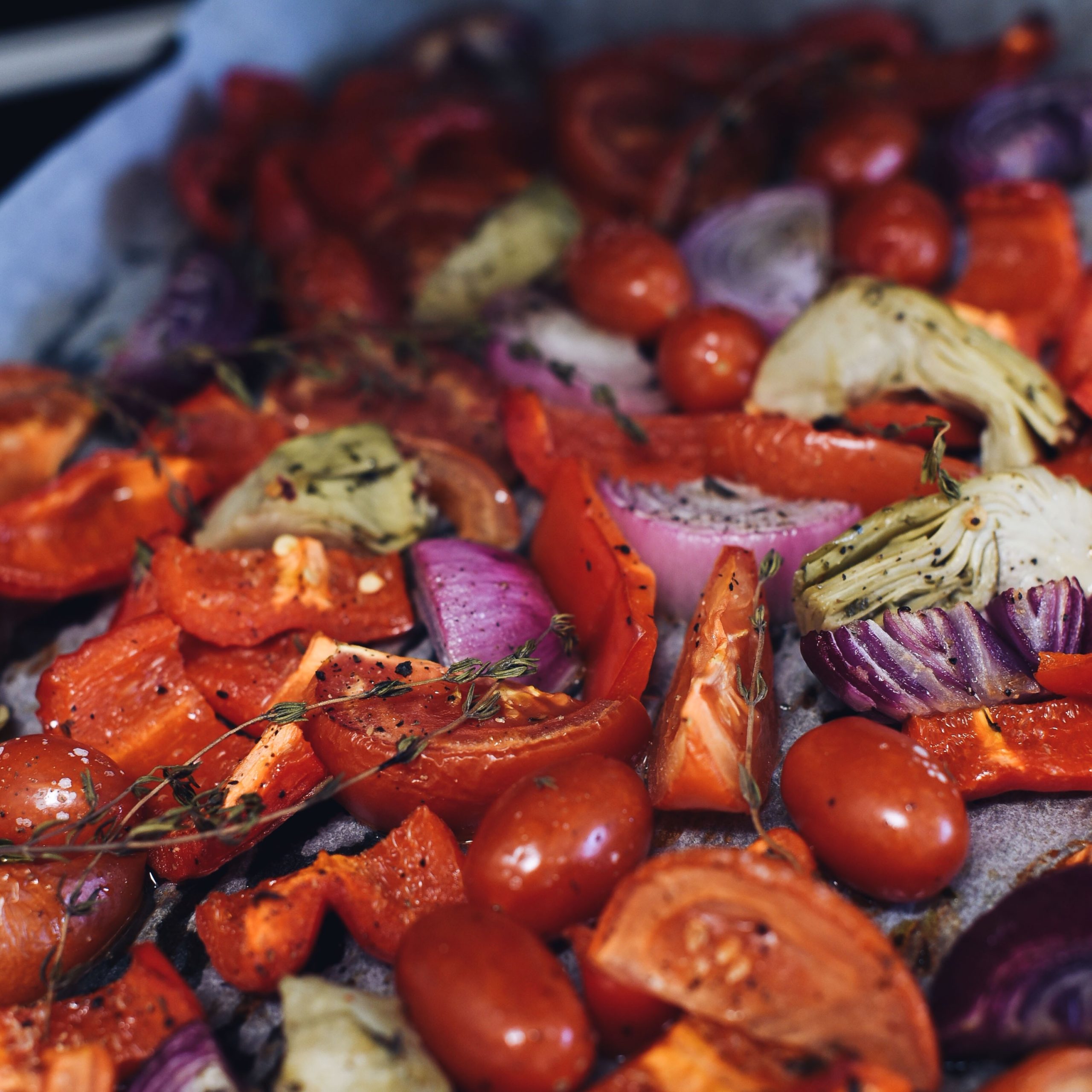
Sheet Pan Roasted Veggies: Try roasting slices of tomatoes along with the cauliflower, mini peppers, and garlic from this week’s box with a little olive oil, sea salt & pepper in a sheet pan at 375 for 35-40 minutes until your crisp veggies are al dente (roast cauliflower for 20 minutes before adding the rest of the veggies so they all finish at the same time).
Bok Choy:
This Asian vegetable is in a class all on its own. It has a delicate and almost foam-like texture but can be quite versatile. Try sautéing in a little olive oil and freshly minced garlic or follow the recipe below. I recently discovered that baby bok choy has a nice flavor without being cooked at all (not sure why I didn’t try it this sooner!) Plus, it has a wonderfully crunchy texture, which I love! So, if you’re not a fan of the squishier consistency of cooked bok choy, try tossing it into a salad with other salad veggies (try using diced apple and raisons in this one!). Then top with your favorite dressing (a ginger vinaigrette works great) or try making your own! You could simply mix olive oil and vinegar with a little mustard (my go to), or try something a little fancier by blending ½ cup of soy, hemp, or almond milk, ½ cup cashews or ¼ cup cashew butter, ¼ cup balsamic vinegar, and a teaspoon of Dijon mustard.
Cauliflower:
It’s incredible how versatile this vegetable can be. Soaking up and blending with whatever flavors surround it, cauliflower fits right in just about anywhere. But cauliflower doesn’t have to go with anything. It’s great all on its own! Simply break it up into small pieces, toss in some olive oil and garlic salt, spread on a baking sheet and bake at 400° for about 15-20 minutes until golden brown.
Cutting out grains? Try this cauliflower pizza crust.
Sugar Snap Peas:
The sweetness of these crunchy veggie lies in their shell. Unlike shelling peas, sugar snap peas are best enjoyed fresh, shell and all. Simply “snap” off the stem bit, and you’re good to go. Great just on their own, they also go well on top of salad, in with pasta, sautéed (lightly) with any Asian-inspired dish or casseroles. Use within 5 days for best flavor and freshness.
Featured Recipe: Grilled Mongolian Chicken Lettuce Wraps
Light yet filling. A delicious, gluten-free meal for those busy weeknights! Makes 8 wraps.
Ingredients:
1 lb. Chicken Breasts
1 large Onion, cubed
0.5 lb. mini Bell Peppers, julienned
1 Baby Bok Choy, roughly cut (1.5-inch pieces or so)
½ cup Sugar Snap Peas cut into 1.5-inch strips
1 teaspoon minced fresh Garlic
½ teaspoon grated fresh Ginger
½ teaspoon Crushed Red Chili Flakes
Salt to taste
3 tablespoon Olive oil or Coconut oil for cooking
1 teaspoon Coconut butter
Mongolian or Barbeque sauce (optional)
Organic Tamarind Soy Sauce (optional)
Cooked Rice as a side, or Lettuce leaves
Instructions:
Wash and cut veggies. Wash chicken thoroughly under cold water, pat dry, cut into cubes.
Heat and grease a frying pan or wok. Cook chicken on the hot pan until fully cooked and browned. This will take ~10 minutes on medium heat. Remove from heat and allow it to cool.
Heat olive oil in a pan (can use the same pan), add ginger and garlic. Cook for 1-2 minutes. Add peas, bok choy, and onions and cook for a minute. Add bell peppers and cook until the veggies are al-dente (vegetables should be crisp tender) (NOTE: you may need to add more oil, or, try chicken broth if they look dry). Stir in the coconut butter and a dash of soy sauce or other favorite sauce if using. Mix together chicken and veggies. Add salt, chili flakes and mix it well.
Serving suggestions: enjoy over a bed of brown rice or white rice. Or, spoon the chicken filling into the center of lettuce leaves—serve immediately before the leaves start to wilt.
Recipe adapted from www.ruchiskitchen.com